X
Welcome to Ceramic Review
Ceramic Review is the magazine for contemporary and historical ceramics, ceramic art and pottery.
Ceramic Review Issue 340
July/August 2026
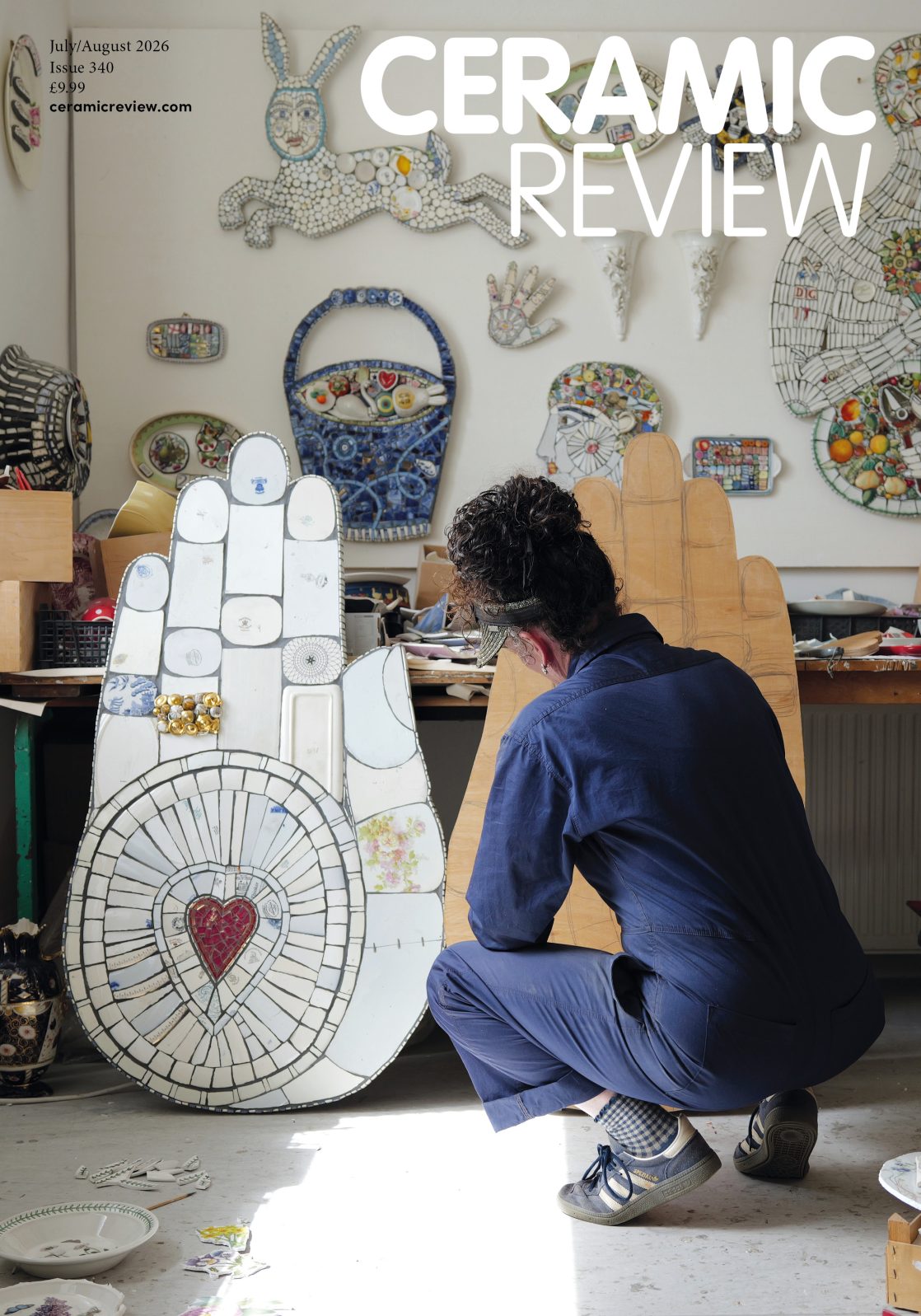
Ceramic Review is the magazine for contemporary and historical ceramics, ceramic art and pottery.
July/August 2026
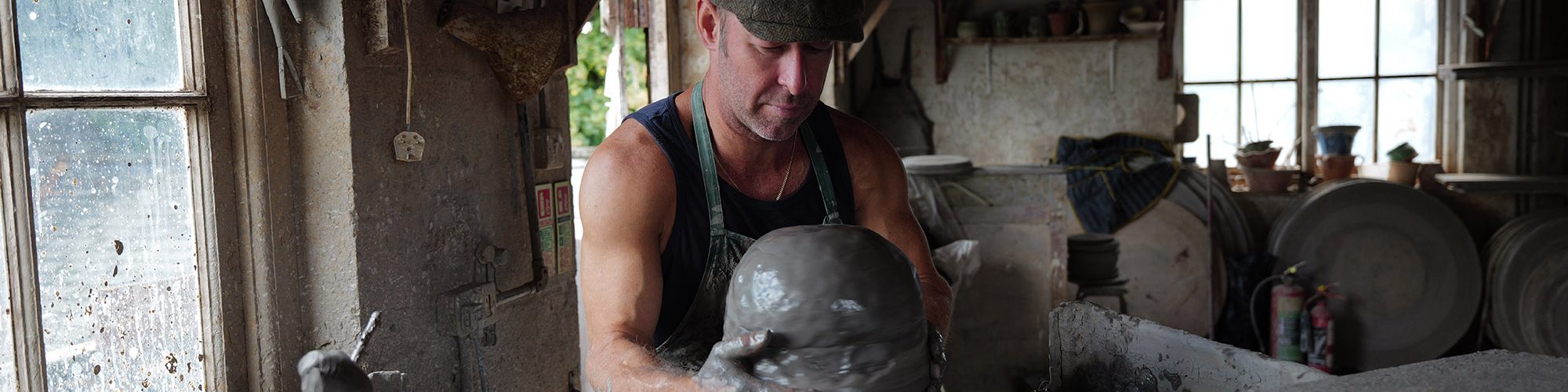
Adam Keeling throws a large garden jar in two sections and demonstrates a traditional technique for making pulled handles.
As master potter and production director at Whichford Pottery, I combine the English earthenware tradition of making flowerpots with personal work inspired by utilitarian slipware. I enjoy the physicality and repetition that throwing big ware entails, whilst also being able to explore my own, and the materials, limits.
My parents, Jim and Dominique Keeling, founded the pottery in 1976, in a barn in a village close to Whichford in the Cotswolds. My father trained at Wrecclesham Pottery in Farnham, Surrey, where he learnt the traditional throwing techniques that had been employed at the pottery for generations. Now named Farnham Pottery, the site dates to 1873. I spent a good deal of time in the workshop growing up and learnt these techniques early. I am passionate about passing on these traditions to my apprentices.
After university, where I studied theology, I worked at Whichford for several years before travelling to France to work with Andrew McGarva (who also trained at Wrecclesham). Following this, I spent some time in La Poterie Provençale in Biot, and at Cliousclat, a pottery in the Drôme Valley (that is still running today) making traditional slip-decorated domestic wares. I also continued to explore the flowerpot tradition by travelling and working in potteries in Italy.
I strongly believe in the importance of shared learning and the continuity and serendipity that communal workshop practices enable. Traditional workshops are an extremely important, yet undervalued, fount of practical knowledge and skill. In the absence of these workshops and the apprenticeship system, where knowledge is transferred from one generation to the next, we risk losing the skills and techniques that make up our intangible cultural heritage.
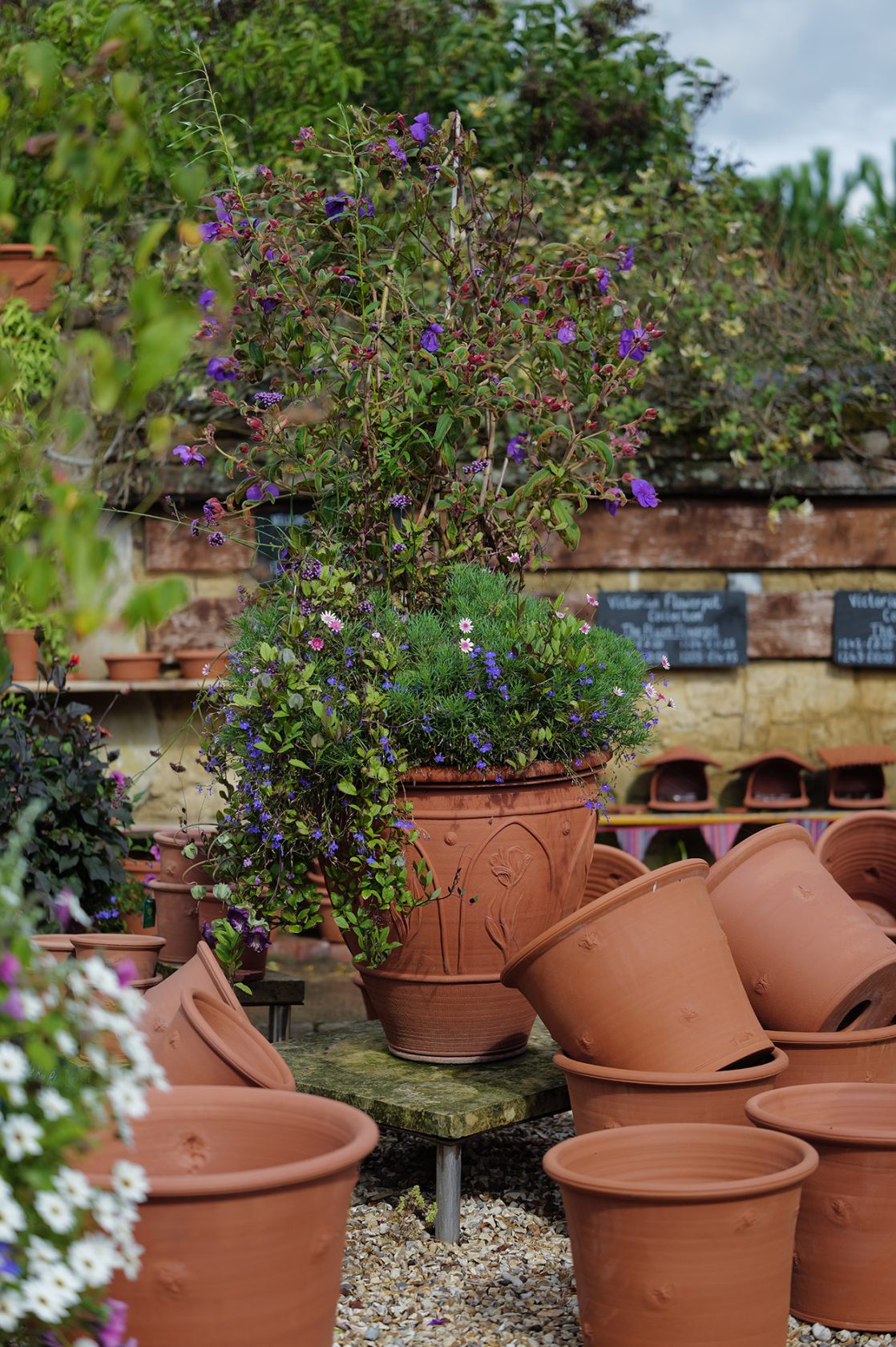
Masterclass with Adam Keeling at Whichford Pottery.
At Whichford, we throw all our flowerpots on the wheel, from tiny longtoms to 500lb giant planters. In the process described here, I throw a jar in two sections, which are then joined together to make a larger pot. I use a 40lb base section and a 30lb top. I also describe how to throw handles. This technique has been widely forgotten in England but was commonly used here until the 19th century. I learnt how to throw handles in Cliousclat. It is an extremely efficient method to create handle blanks before pulling.
The clay we use at Whichford is refined from raw at the pottery. It is mostly a local clay with the addition of some Staffordshire fire clay and 8% molochite for grog. Best of all, it is frost proof if fired correctly, allowing us to offer a unique 10 year all-weather guarantee on our flowerpots.
Much of what I and the team of eight throwers at Whichford make is exported, especially to Japan and America where the pots are highly prized. I am very proud that our workshop is open to the public daily and our pots can be seen in gardens, historic institutions and homes up and down the country.
For more details visit whichfordpottery.com; @adamsapotter
Subscribe to read the full step-by-step guide.
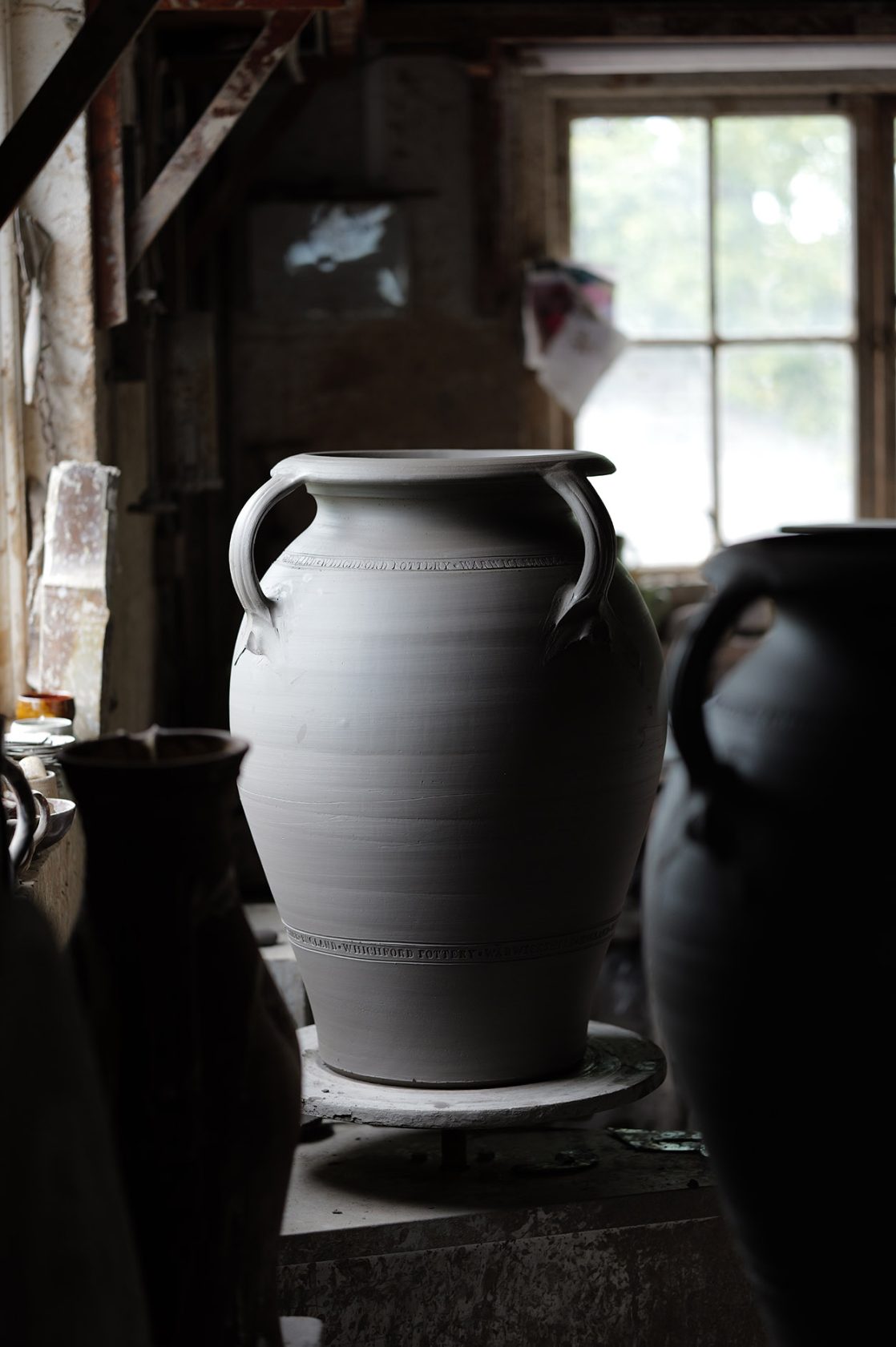
Masterclass with Adam Keeling at Whichford Pottery.
Ceramic Review is the international magazine for contemporary and historical ceramics, ceramic art and pottery.
As a subscriber to the print magazine, you also get FREE access online to the entire Ceramic Review archive – going all the way back to our first issue in 1970. Digital subscriptions are online only.