X
Welcome to Ceramic Review
Ceramic Review is the magazine for contemporary and historical ceramics, ceramic art and pottery.
Ceramic Review Issue 340
July/August 2026
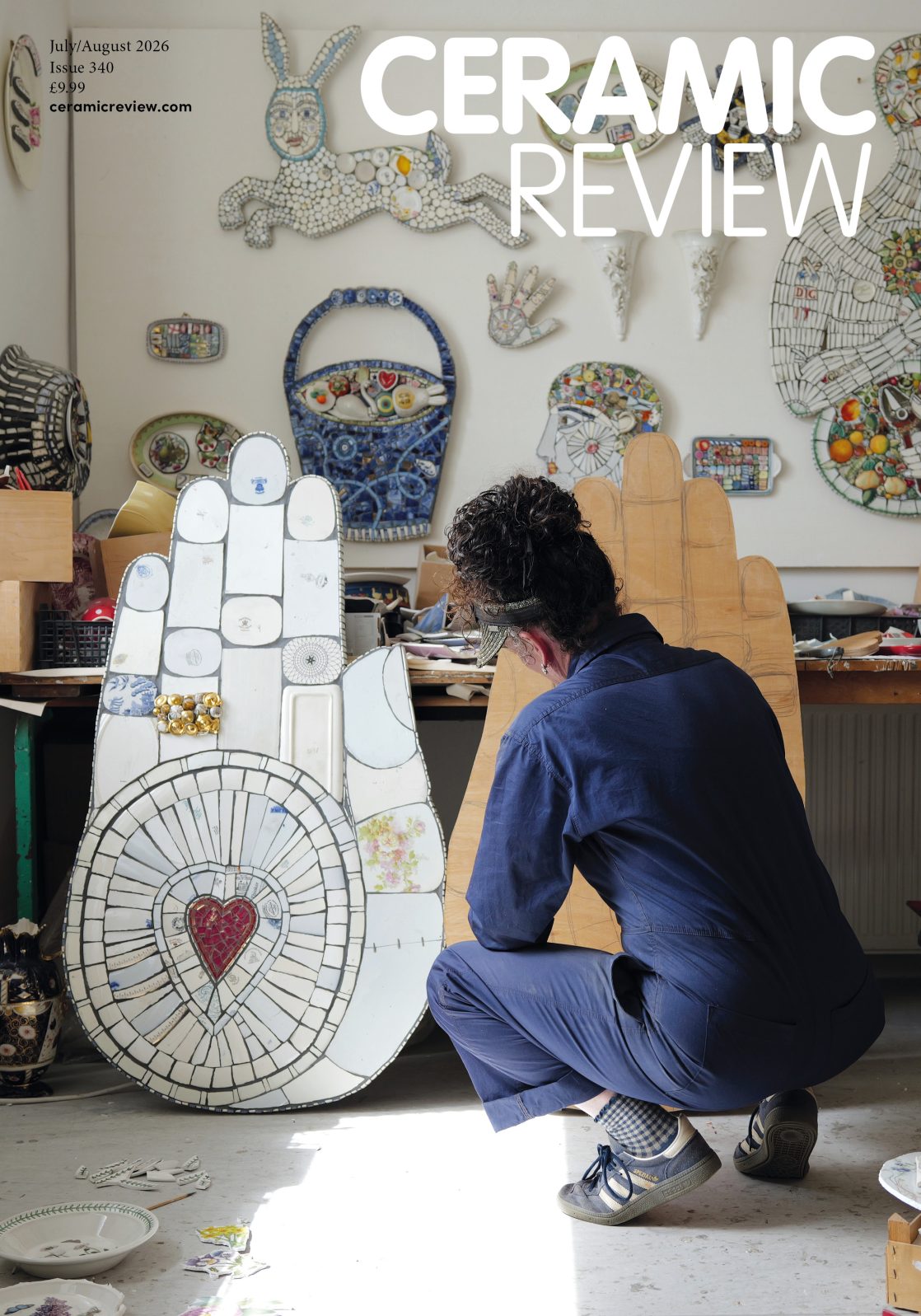
Ceramic Review is the magazine for contemporary and historical ceramics, ceramic art and pottery.
July/August 2026
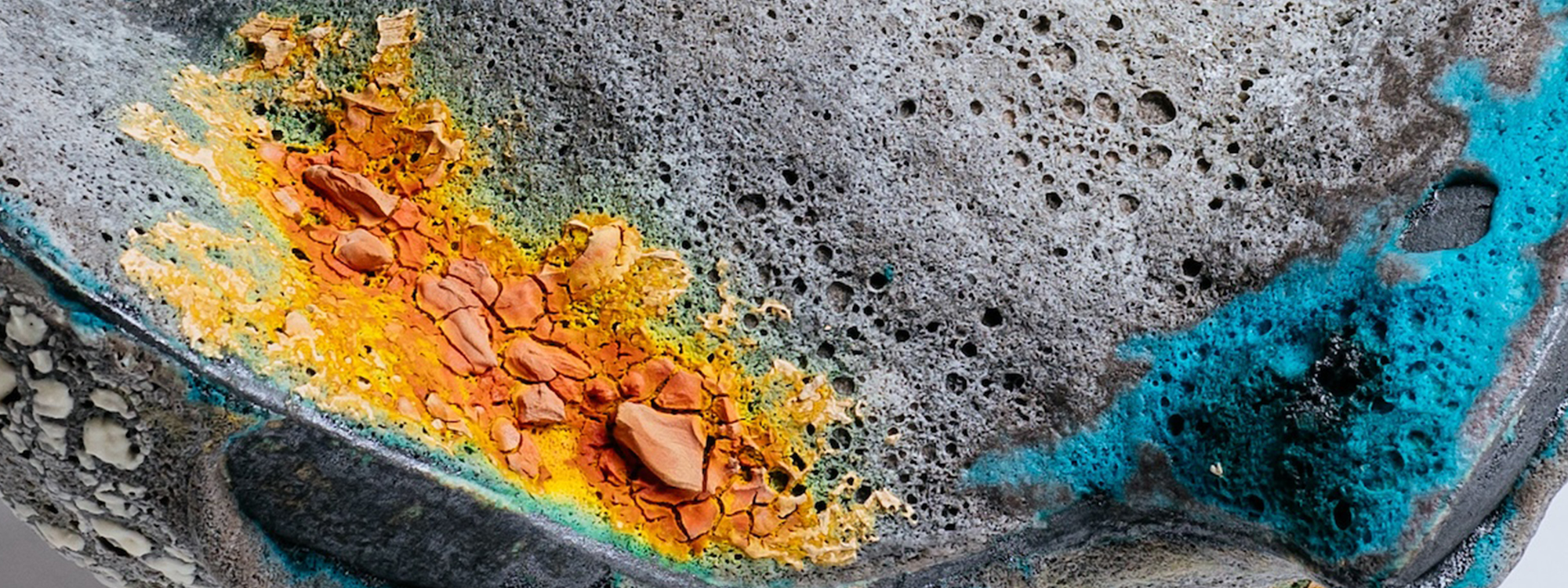
Inspired by the constant cycle of decay and renewal, Cathy Burke shares her Lichen glaze recipe
I have always been drawn to matte, textured glazes over shiny, glossy finishes. They speak directly to my sensibilities, are earthy, expressive and full of narrative potential. There is something deeply satisfying about building a surface that feels like a miniature landscape, one that invites touch, rewards close looking, and hopefully, sparks a connection between the viewer and the piece.
Layering multiple glazes and slips has long been at the heart of my practice. This approach allows me to create surfaces that are rich, tactile and full of life. It has become a kind of surface choreography, where colour, texture and form interact dynamically.
Among all the combinations I have explored, one glaze has remained a constant in my studio: the lichenous crawl glaze. My fascination with crawl glazes began during my college years. I was immediately captivated by their gritty quality, the way they split, contract and crawl back to reveal dramatic colour beneath.
They felt wild, alive and full of movement, like something growing directly on the clay. I loved their versatility: sometimes they stood alone as a statement glaze, while other times they provided a base for silver gilding. Even in the smallest quantities, crawl glazes add vibrancy and complexity to the surface.
Those early experiments were fuelled by The National College of Art and Design’s treasure trove library of glaze books and the well-stocked glaze room, a true playground for my curious mind.
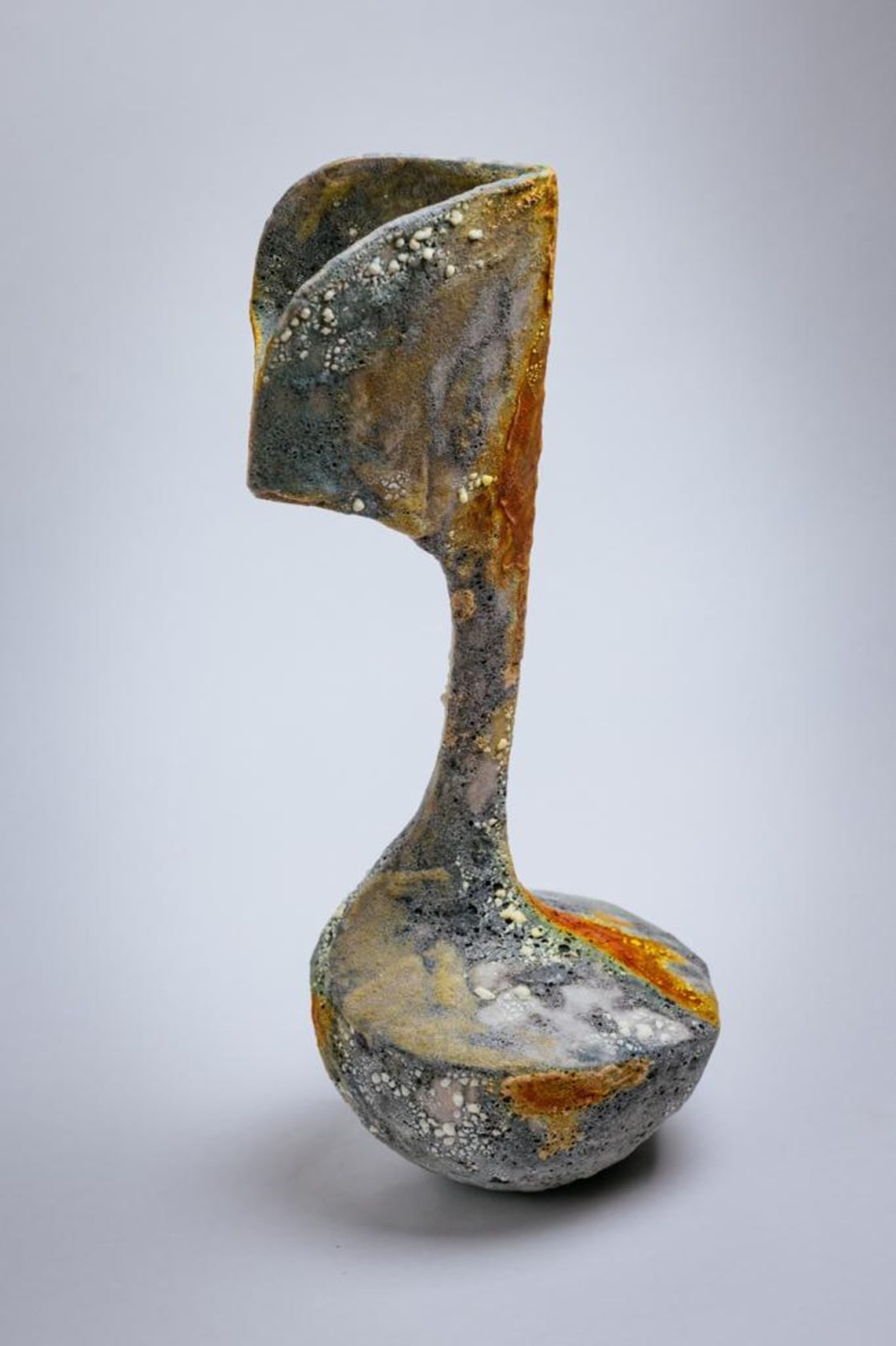
Around this time, I also discovered the stunning work of Canadian artist Darren Emenau and his MNO Lichen glaze, which he had generously shared online. What appealed to me most was its lower firing temperature, just 1060°C, compared to other crawl glazes that required much higher temperatures. I began experimenting and adapting the recipe, making minor adjustments to suit my own practice and introducing colour variations through different stains and oxides. It quickly became a cornerstone.
Initially, I used it on earthenware slip-cast forms, pieces that had been bisque-fired with coloured slips, then glazed simply with the coloured lichen glazes. That layering, the colour beneath and the texture above, created an exciting visual tension and a beautiful rich surface. As I grew more confident, I began combining the lichen glaze with other glazes and surface treatments, unlocking an endless array of colour and texture possibilities.
I also delved into Jeremy Jernegan’s Dry Glazes book, experimenting with several of the recipes to explore dry gritty textures. This layering of multiple glazes gave me the freedom to work in a painterly way, applying glazes with brushes and sponges to build rhythm, depth and movement across the surface. The lichen glaze often became and continues to be, the final flourish, tying everything together and delivering the richly textured finish I was after.

There is always that moment of mystery in the kiln, the alchemy, the transformation you can’t entirely control. I live for that moment. It is where the technical meets the magical, and no matter how many firings I have done, it never loses its thrill. That said, after years of working with it, I find the lichenous glaze to be remarkably reliable and fairly predictable. It still delivers that lively, organic texture I love, but with a consistency that allows me to trust it as the final touch in my surface compositions.
Light magnesium carbonate is essential, standard magnesium carbonate just doesn’t yield the same crawling effect or apply as smoothly. It is a voluminous material, so I always use a larger-than-usual vessel for mixing. Due to the inclusion of bentonite and light magnesium carbonate in the recipe, I recommend mixing all the dry ingredients thoroughly before adding water. Both materials are highly absorbent and can be tricky to mix evenly otherwise.
As I work with multiple glazes on a single piece, each goes through several firings. After the bisque, I typically begin with high-fired volcanic or crater glazes, then layer others in stages. The lichenous glaze is usually the final layer, fired to 1060°C. I find it performs best with a generous, heavy application, and it often begins to crawl back even before firing, offering a tantalising preview of what is to come.
As my practice evolved, and environmental themes became more central to my thinking, the lichenous glaze took on even greater significance. Its textured, crusty surfaces became symbols of natural resilience, decay and regrowth, echoing both the fragility and tenacity of our ecosystems. My botanical background has always fed into my inspiration and these textured, earthy glazes have come to visually represent the ecological concerns underpinning much of my work.
There is a quiet urgency in these surfaces, like nature quietly reclaiming space. Through them, I hope to prompt reflection on the delicate balance we live within, and perhaps stir a deeper appreciation for the wild, wonderful textures of the world around us.
For more details visit cathyburkeartist.com; @cathyburkeartist
Subscribe to read the full glaze recipe.

Ceramic Review is the international magazine for contemporary and historical ceramics, ceramic art and pottery.
As a subscriber to the print magazine, you also get FREE access online to the entire Ceramic Review archive – going all the way back to our first issue in 1970. Digital subscriptions are online only.