X
Welcome to Ceramic Review
Ceramic Review is the magazine for contemporary and historical ceramics, ceramic art and pottery.
Ceramic Review Issue 340
July/August 2026
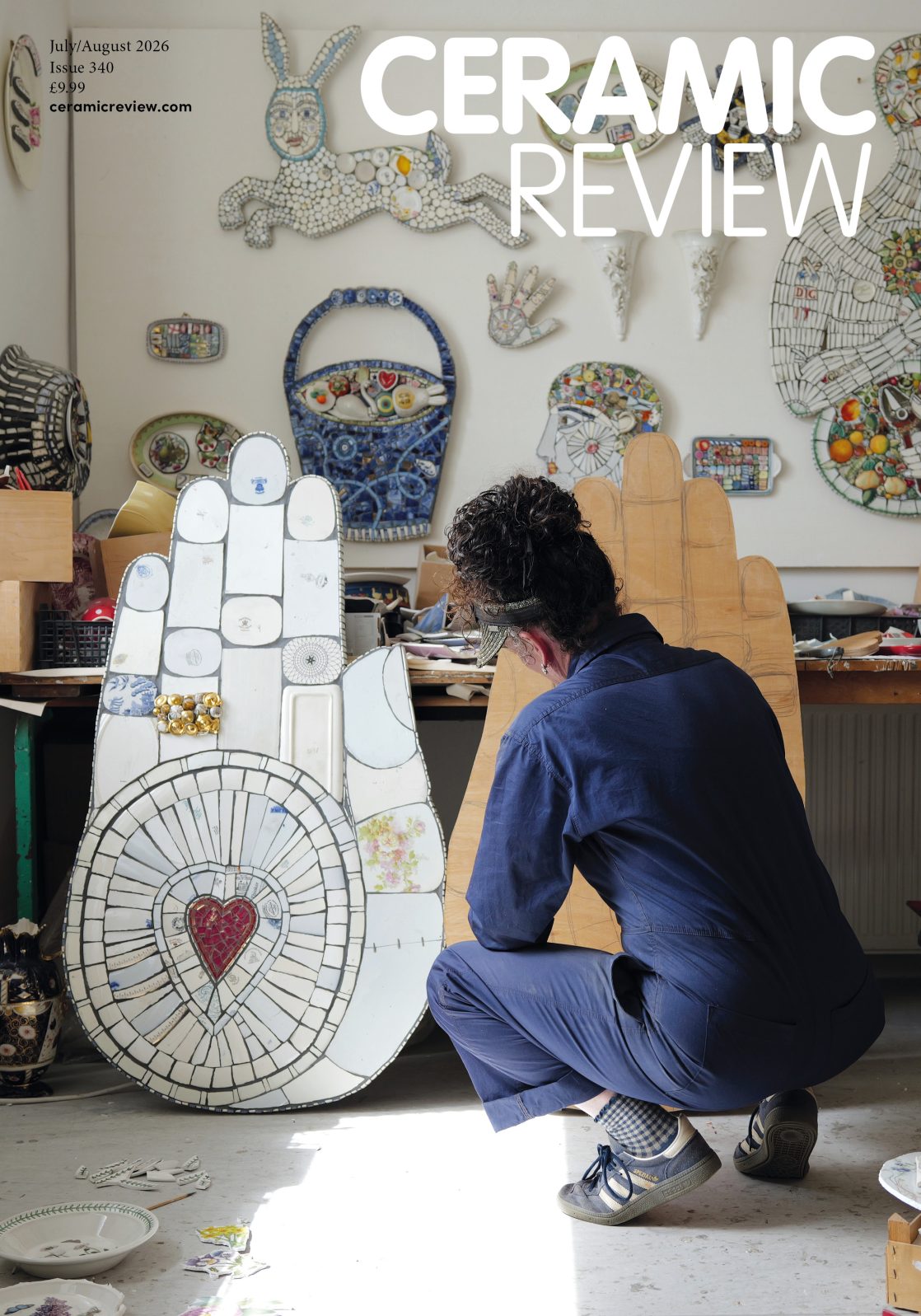
Ceramic Review is the magazine for contemporary and historical ceramics, ceramic art and pottery.
July/August 2026
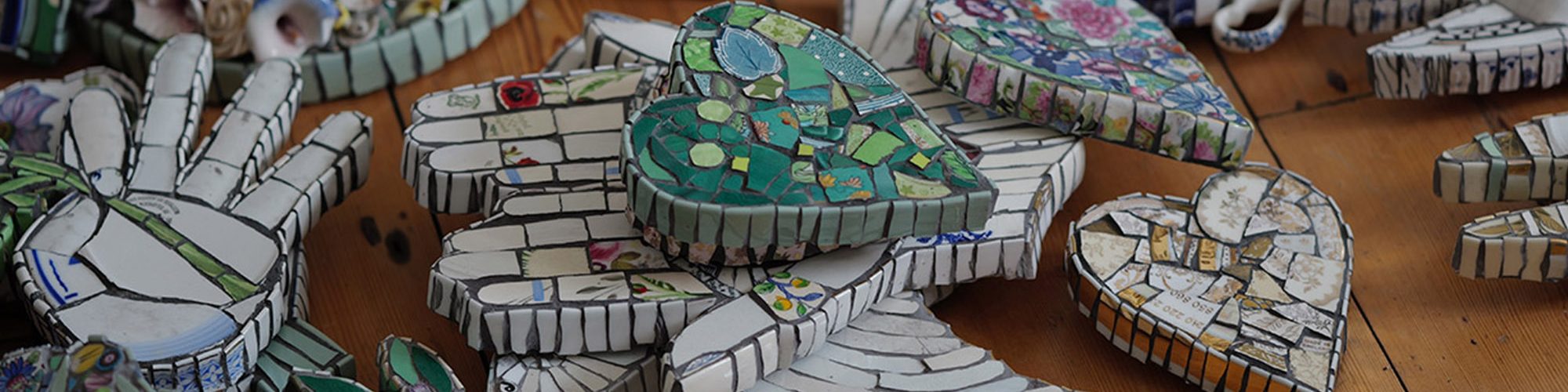
Cleo Mussi guides us through the techniques and processes she uses to create ceramic mosaics.
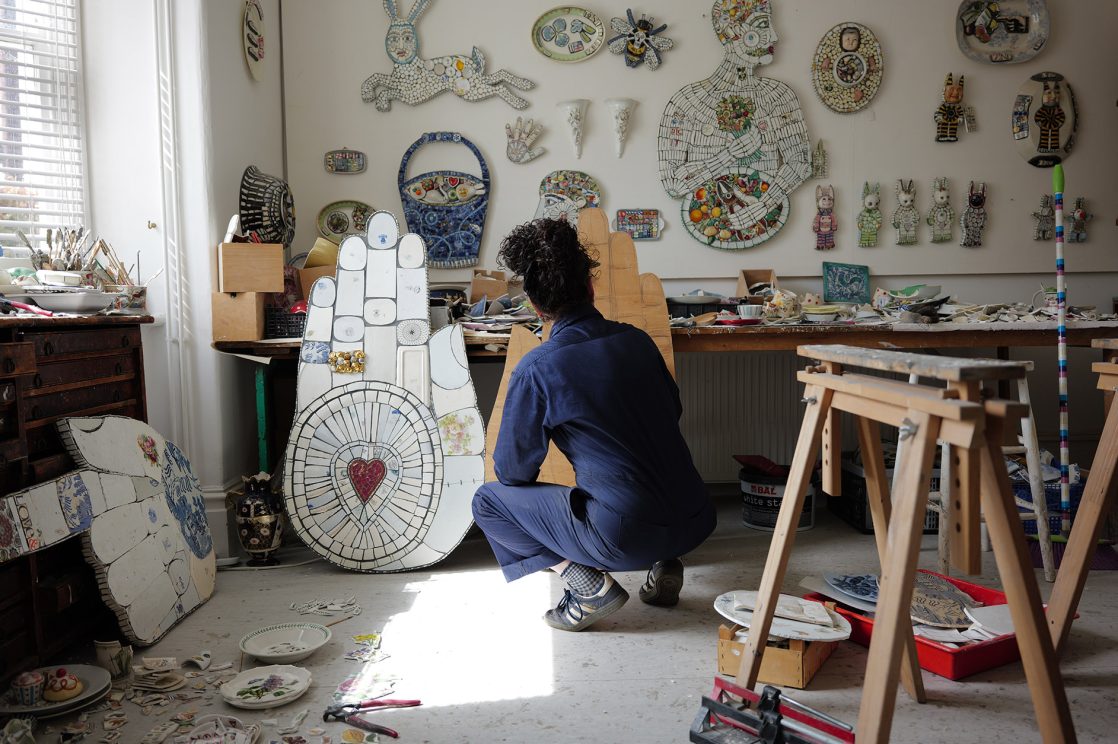
Lately, I have come to the realisation that I am a bit of an outsider. I do not fit into the traditional categories that are archived and represented in museums or galleries. In many respects, this has given me the freedom to create my own personal language and do exactly what
I want, dipping in and out of others’ rule books. It is, however, rather wonderful to be welcomed into the ceramic world after 40 years in the making. I am self-taught in the direct method of mosaic. Essentially, I ‘draw’ with ceramic shards sourced from historical tableware; cutting and shaping each piece to form uniquely intricate one-off pieces and very large figurative installations. I spent 10 years learning studio pottery at evening classes, which gave me an appreciation for the depth of patience, repetition, order, knowledge, historical references and toil that is within each piece
I de-construct. In many respects, I work from the end of the ceramic process backwards, deconstructing, re-shaping and reinventing a new story made up from historical fragments. Is it zero waste? Perhaps it is. Having originally trained in textiles at Goldsmiths,
I was taught the basics of printing, weaving, knitting and tapestry, and yet I still had a passion for sculpture and the dimensional and traditional ceramics from other cultures. When I started working in mosaic 40 years ago, there were only traditional practitioners working within the Roman style or outsider artists. For me, these styles seemed technically constricted by too many rules and visually limited – looking backwards to the past or too random. So, strangely, I have morphed all of these interests and observations into my own new language.
The materials that I choose, or those that find me, also express my love of reclaiming and rescuing tableware from landfill. They are often dead people’s unwanted china collections, and I give them a new life. Pre-loved and discarded becomes re-loved and re-invented. It is a circular economy, reworking every inherent intricate detail, mark, pattern shape and ornament, forming interwoven familiar layers within new stories.
My ideas are centred on current environmental or social/political concerns. I look at the ‘real’ world around us in relation to the human form. Most recently herbal medicines, horticulture, and folklore with all their unique shapes, always paying as much attention to the edges and the spaces in-between as I do the surfaces, hopefully with humour and a lightness of touch.
My work incorporates and marshalls together seemingly disparate elements that would never sit side by side in a museum or collection, but for me, each ceramic has equal value. Meissen, Wedgwood and 18th-century Staffordshire ware sit with 21st-century Bridgewater and 1960s Woolworths’ Homemaker. Granny flowers and sometimes ancient Japanese pot fragments merge with industrial utensils from chemistry labs, all jostling for position in the worlds I am building and the stories I am telling.
In my work, there is no hierarchy to the materials other than the detail that presents itself and how straightforward or complex it will be to cut.
Ceramic Review is the international magazine for contemporary and historical ceramics, ceramic art and pottery.
As a subscriber to the print magazine, you also get FREE access online to the entire Ceramic Review archive – going all the way back to our first issue in 1970. Digital subscriptions are online only.