X
Welcome to Ceramic Review
Ceramic Review is the magazine for contemporary and historical ceramics, ceramic art and pottery.
Ceramic Review Issue 340
July/August 2026
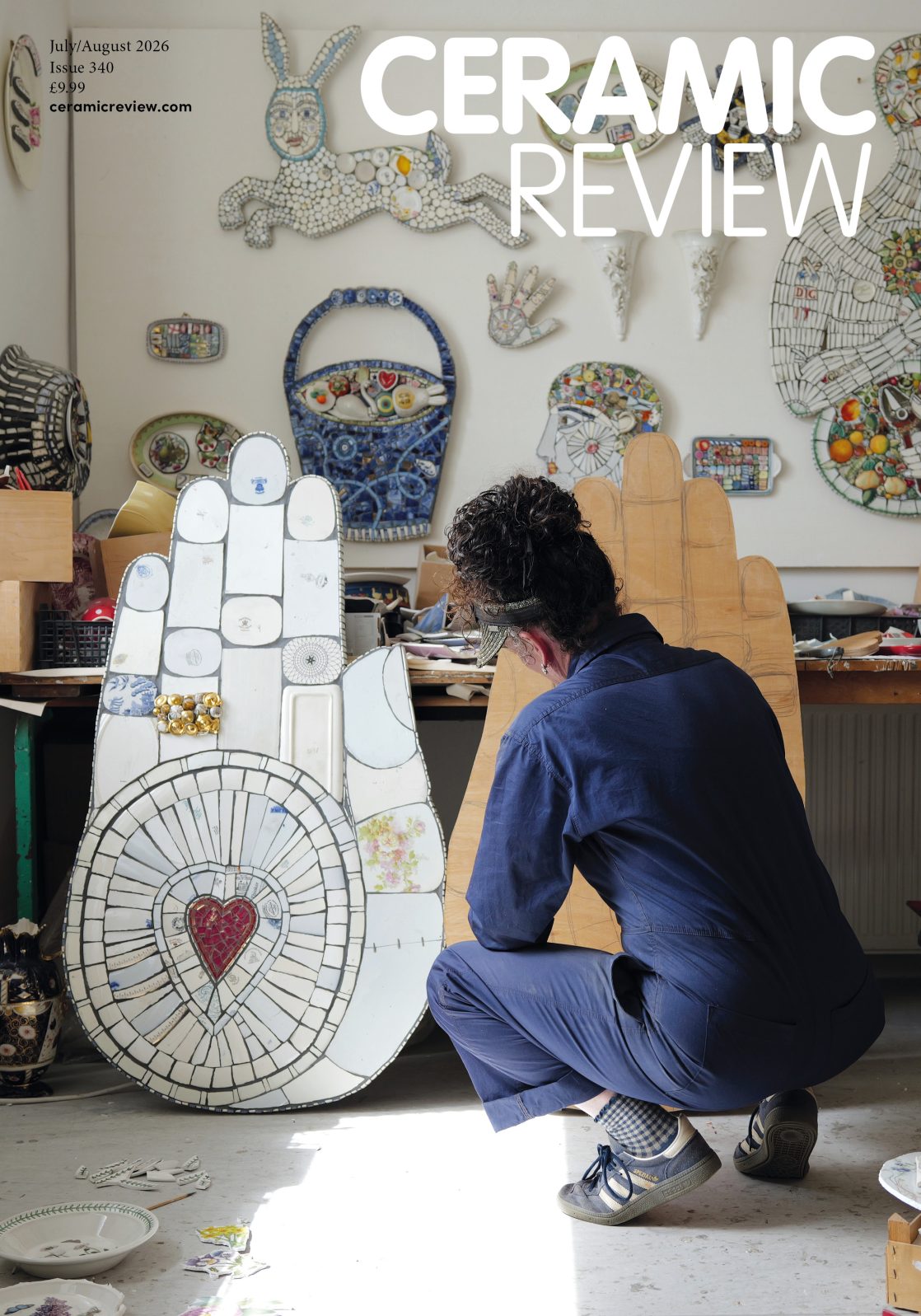
Ceramic Review is the magazine for contemporary and historical ceramics, ceramic art and pottery.
July/August 2026
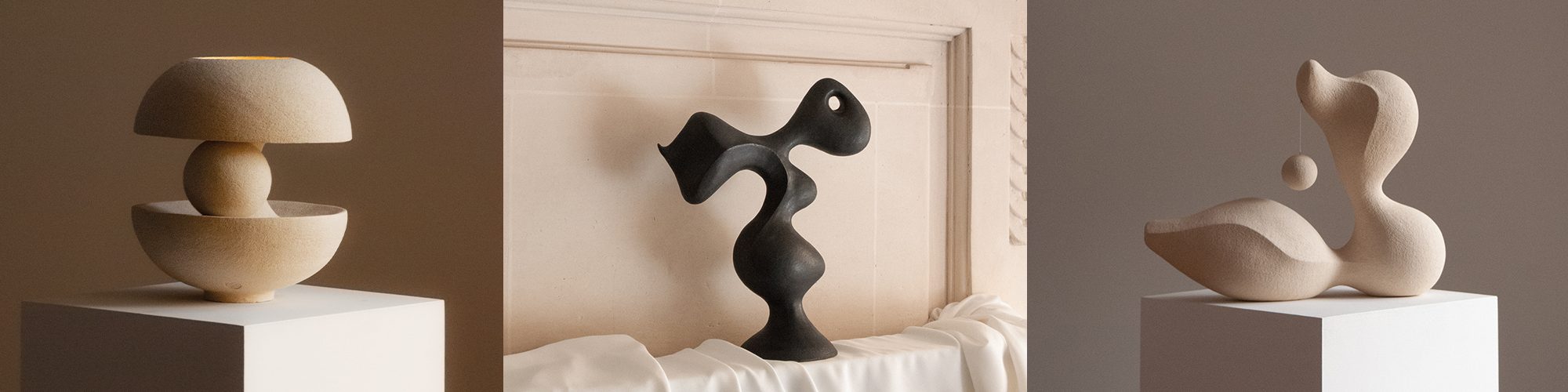
Sybil Layous creates ceramics that balance sculptural energy with a designer’s eye

Ambiguous, playful, tactile – this is how I would describe my work. Objects that invite curiosity and inspire connection. As a designer and maker, it is my way of saying, ‘This is how I view the world and this is how I would like to contribute.’ I like to imagine that if my pieces are found in the future, they will stand as markers of our time – not only reflecting what our era looked like but showing that we valued preserving our humanity.
My work occupies a space between sculpture and design. I use a timeless material in ways that feel contemporary, while remaining conscious of its history. My process is rooted in ceramic tradition, yet I resist being boxed into either craft or function, aiming instead to carve out a space for myself between these categories. Navigating the balance between form and function is especially challenging.
Living in Paris, I quickly discovered that art gallerists love categories. They would ask: Are you a potter or an artist? Functional ware seemed to particularly irk them. Choosing a label became necessary and I eventually settled on designer-maker working with clay. That label opened the door to galleries focused on collectible design, a space that felt more inclusive. It also allows room for me to grow across disciplines and mediums when the time is right. So yes, I don’t consider myself an artist with a manifesto.
.
My main objective is to reaffirm the place of traditional craft within contemporary collectible design. It also aligns with my belief that the domestic space is no less noble than the gallery. Objects have the power to transform a home and become part of its history, evolving into heirlooms. I embrace this idea through French ceramicist Valentine Schlegel’s philosophy. She called her pieces ‘sculptures à vivre’ (sculptures to live), a way of elevating the everyday: ‘J’aime le quotidien exceptionnel’ (I love the exceptional everyday life).
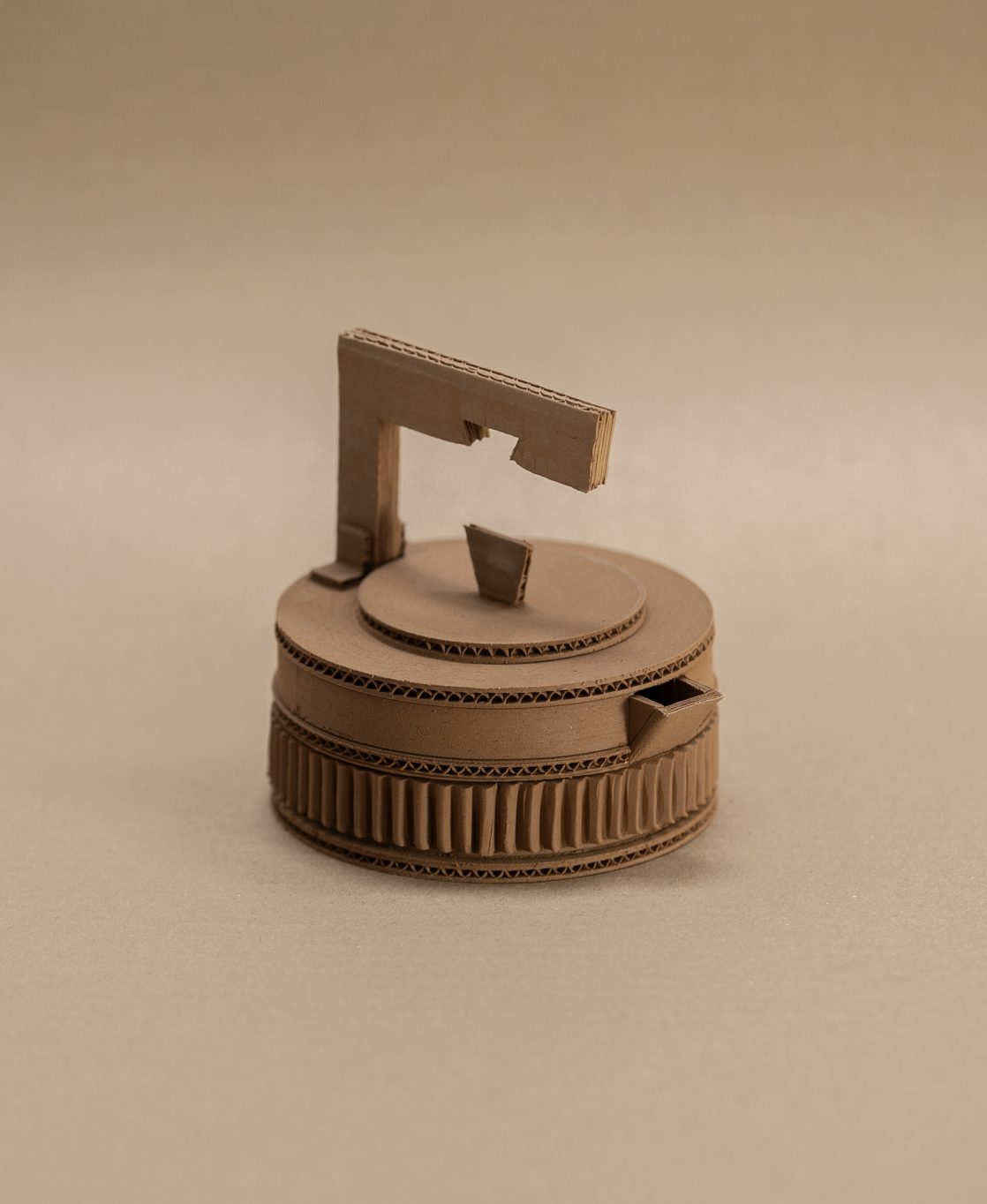
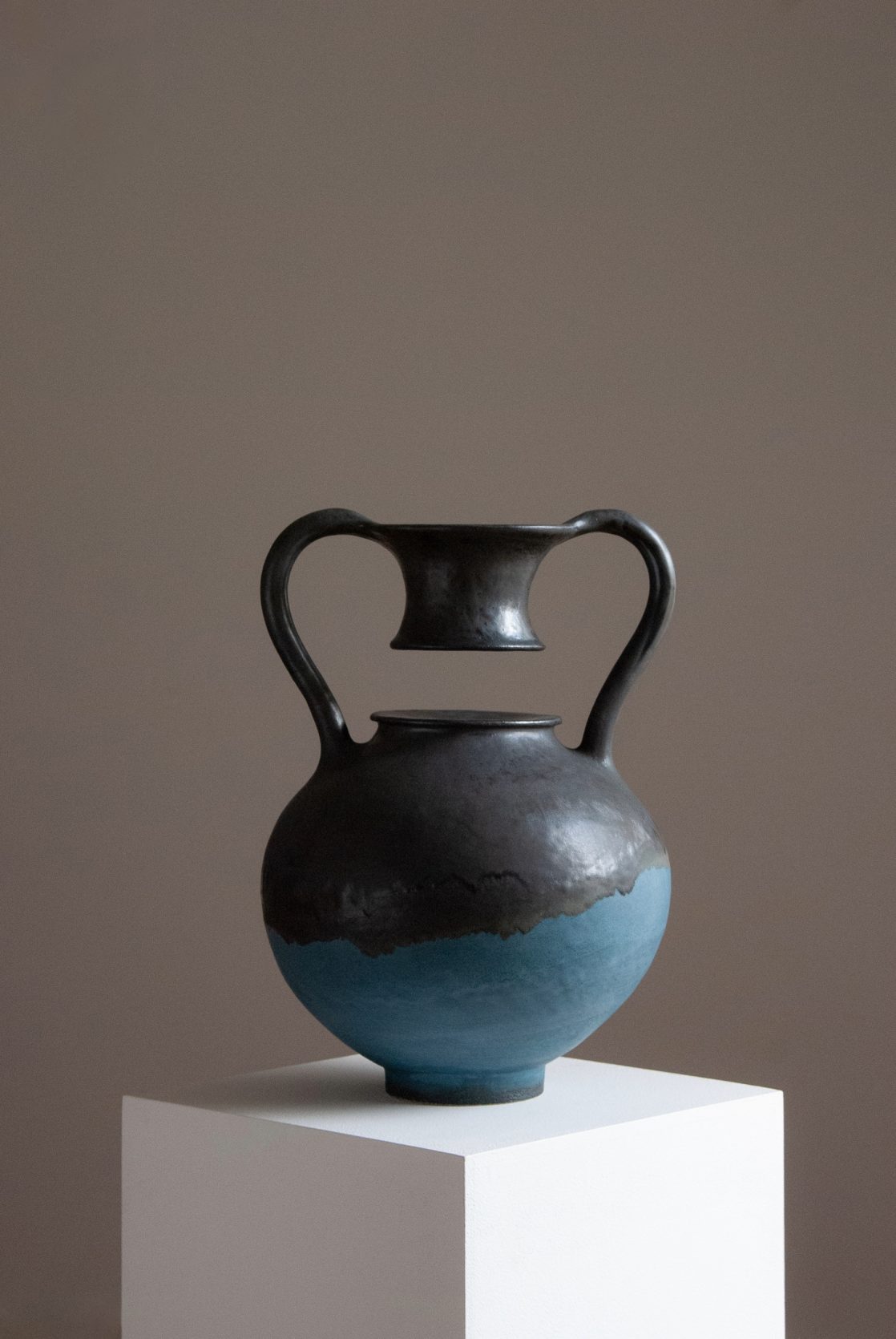
Like many ceramicists, I started with creating vessels. It was hard to let go of the form, and in many ways, I never have. My Interstice vases, a deconstructed vessel suspended by handles, are among my bestsellers. I think people respond to the familiarity of the shape. That was the first time I felt I had created something that was fully mine– like I had found my voice. The idea was to take an ancient form and subvert its function, to play with balance, suspension and risk. Beyond the vase, my sculptural pieces, both functional and non-functional, are often described as biomorphic, which fits. They don’t mimic living things directly but suggest life in quieter ways.
Constantin Brâncuși, Hans Arp, Barbara Hepworth, Isamu Noguchi and Philippe Hiquily have significantly influenced me. I am drawn to purity of form and reduction over ornament. My focus on volume and proportion means that colour becomes secondary. My palette is dark, matte, quiet. My glazes don’t distract; it is an intentional choice. There is also a part of me that feels intimidated by glazes. It is a world I have barely begun to explore.
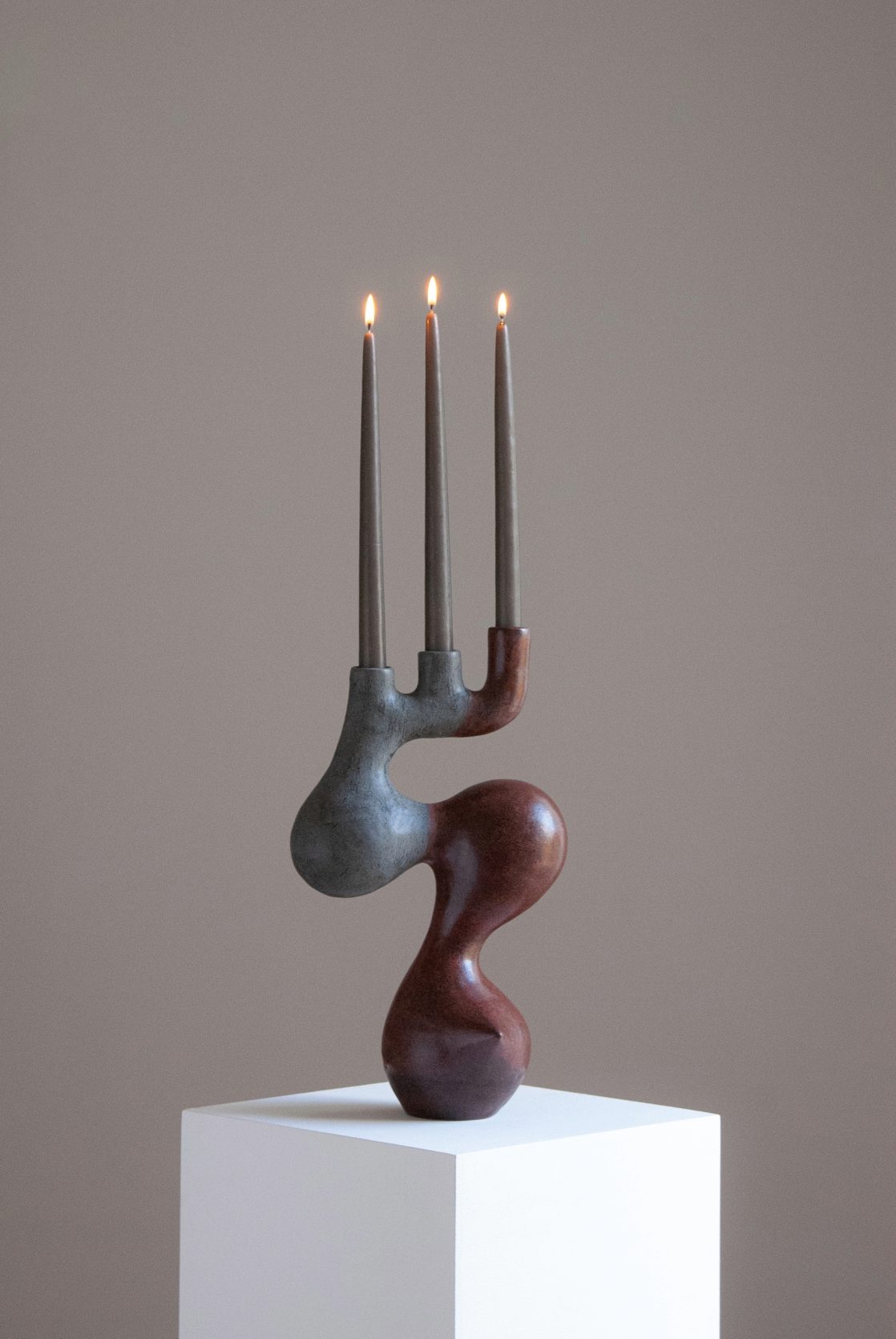
My early professional years were spent in fashion communication at a couture house in Paris. Although I was surrounded by design and craftsmanship, I felt disconnected from the physical act of making. Most of my time was spent behind a screen, but the elegance of couture stayed with me – the discipline of proportion, the poetry of curves, and the art of deconstruction all inform how I conceive shape today.
I am exclusively a handbuilder, working mostly with coils. This was a conscious decision as the wheel felt too constrictive; mistakes felt costly. My process can be erratic, adding, removing, adding again until the piece feels resolved. I wouldn’t be able to imagine creating without that constant push and pull. It is always a balance between surrender and intention. I work with mid-fire stoneware in an electric kiln. Each piece brings both excitement
and trepidation because of the technical demands involved in building, firing and glazing.
I am mostly self-taught but my technique only really opened up when I watched Clive Sithole make Zulu pots. His approach is intuitive, unpretentious and deeply embodied. It is grounded in ancestral rhythm rather than academic polish. When people watch me work now, they are surprised as I am quite rough and fast. Yet, like Sithole, I still spend a lot of time refining surfaces. By the time a piece is finished, it should look entirely intentional, as if it was always meant to be that way.
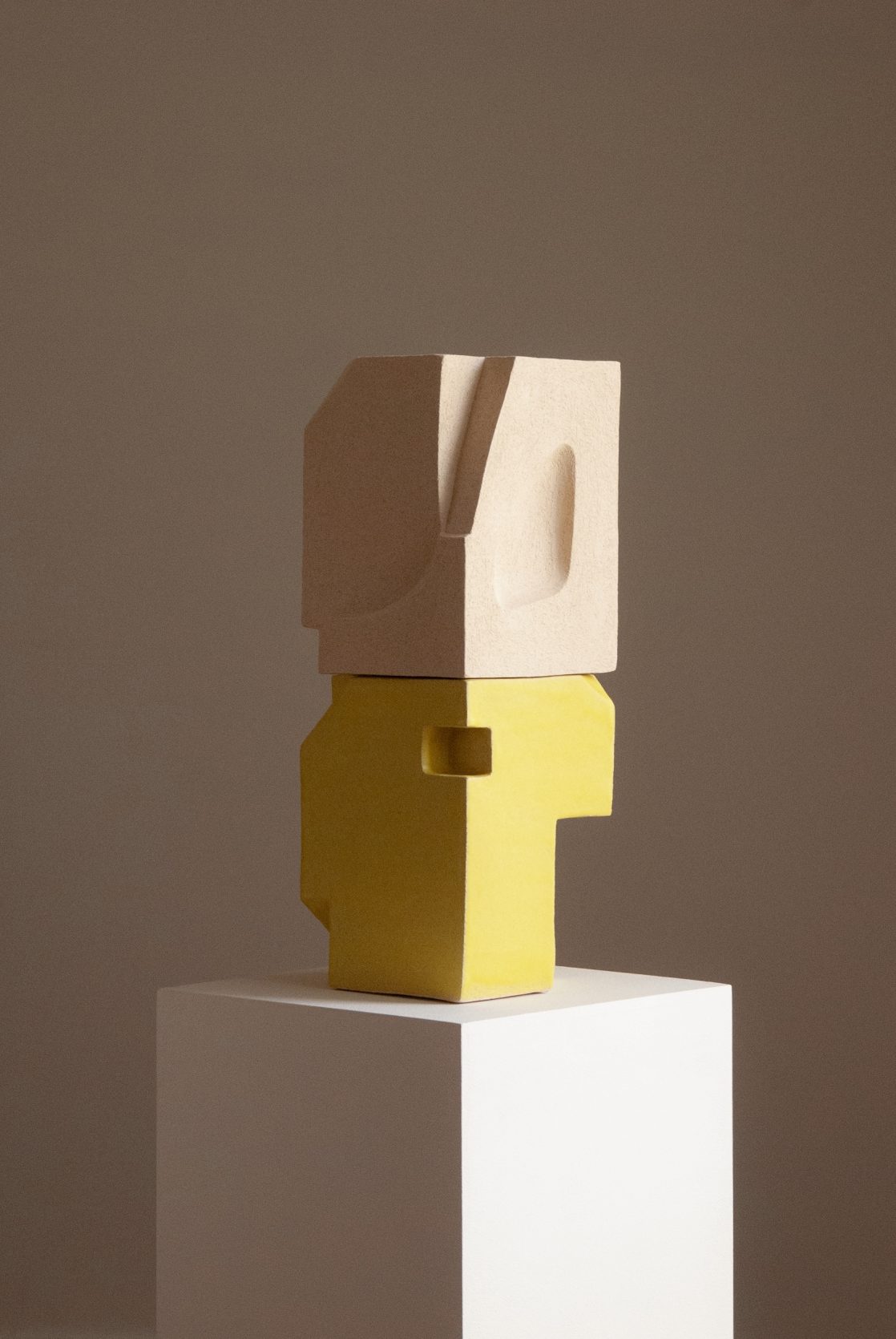
A turning point in my career came when Cherine Magrabi, founder of the House of Today, offered me the chance to create a capsule collection in dialogue with Serge Poliakoff, the post-war French abstractionist painter. It was an honour to exhibit alongside a modernist master, but also a challenge. It pushed me out of my comfort zone, away from muted tones and into colour, from soft curves and into geometry. That series marked a pivotal shift in my practice.
Earlier this summer I visited the Saloua Raouda Choucair Foundation in Lebanon. Her work as a painter and sculptor was unbounded. She transcended categories, worked across materials and never limited herself by function or form. That is the direction I would like to move toward: free and unbounded.
For details visit sybillayous.com; @sybil_layous
Ceramic Review is the international magazine for contemporary and historical ceramics, ceramic art and pottery.
As a subscriber to the print magazine, you also get FREE access online to the entire Ceramic Review archive – going all the way back to our first issue in 1970. Digital subscriptions are online only.