X
Welcome to Ceramic Review
Ceramic Review is the magazine for contemporary and historical ceramics, ceramic art and pottery.
Ceramic Review Issue 339
May/June 2026
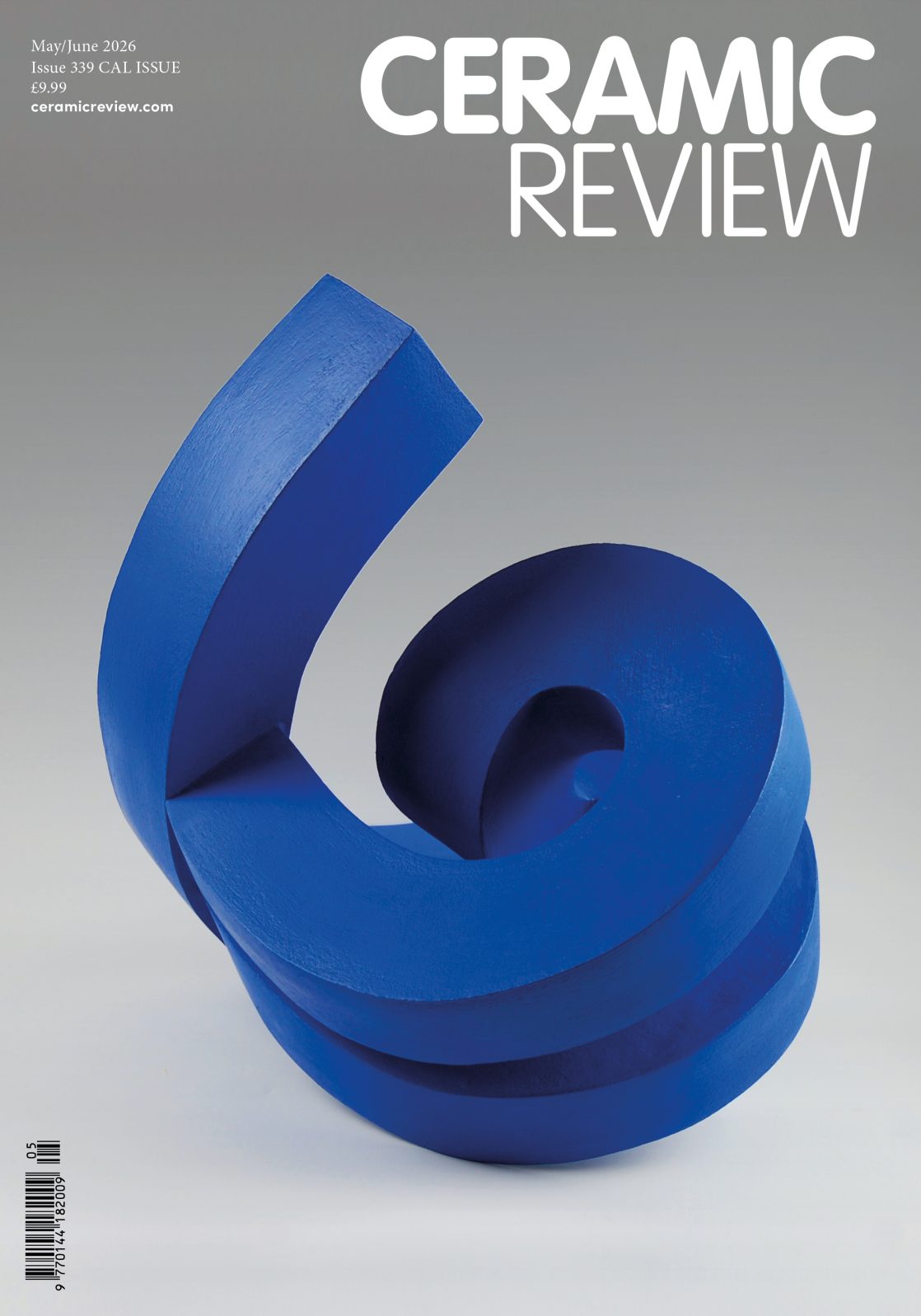
Ceramic Review is the magazine for contemporary and historical ceramics, ceramic art and pottery.
May/June 2026
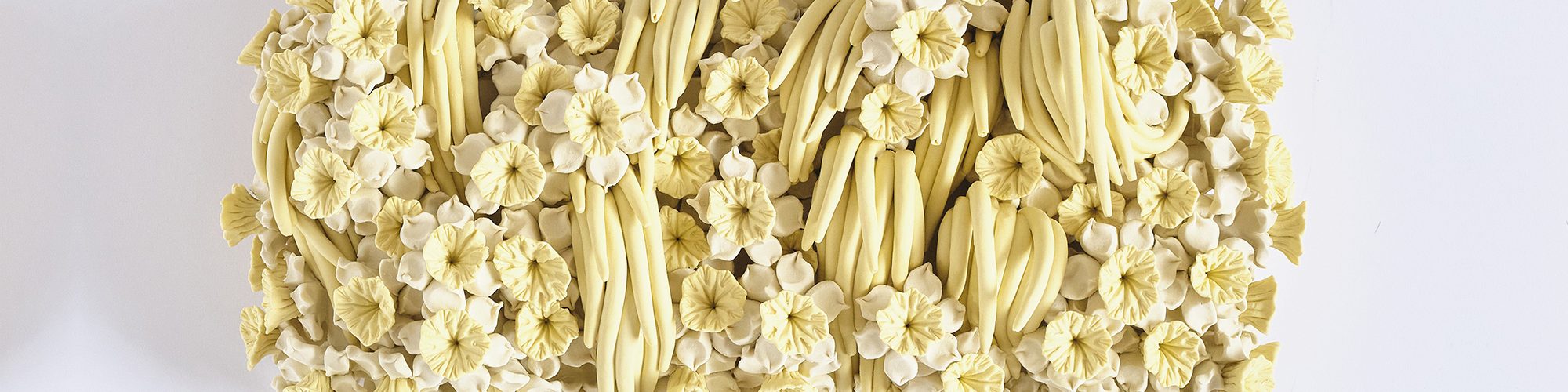
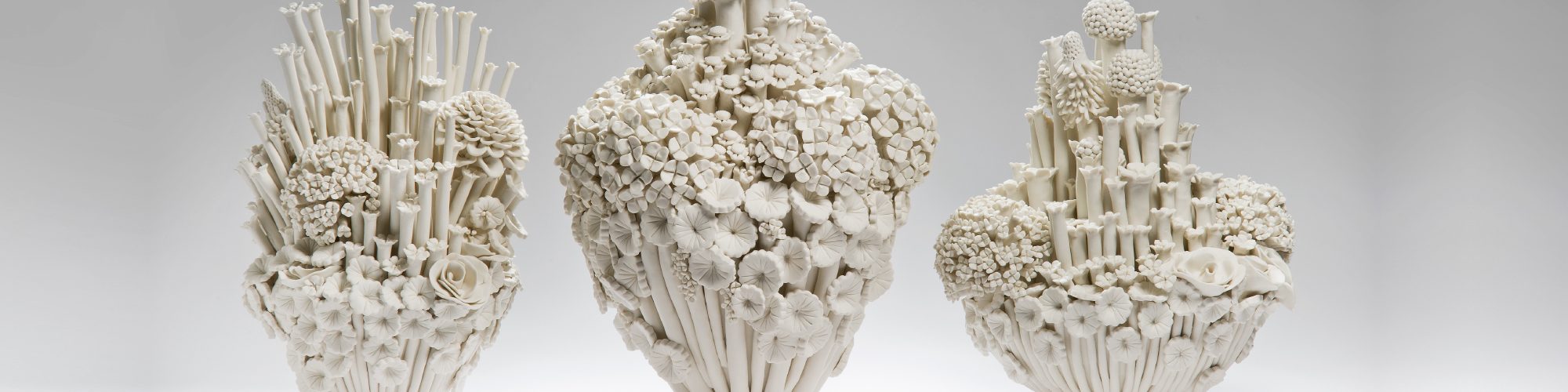
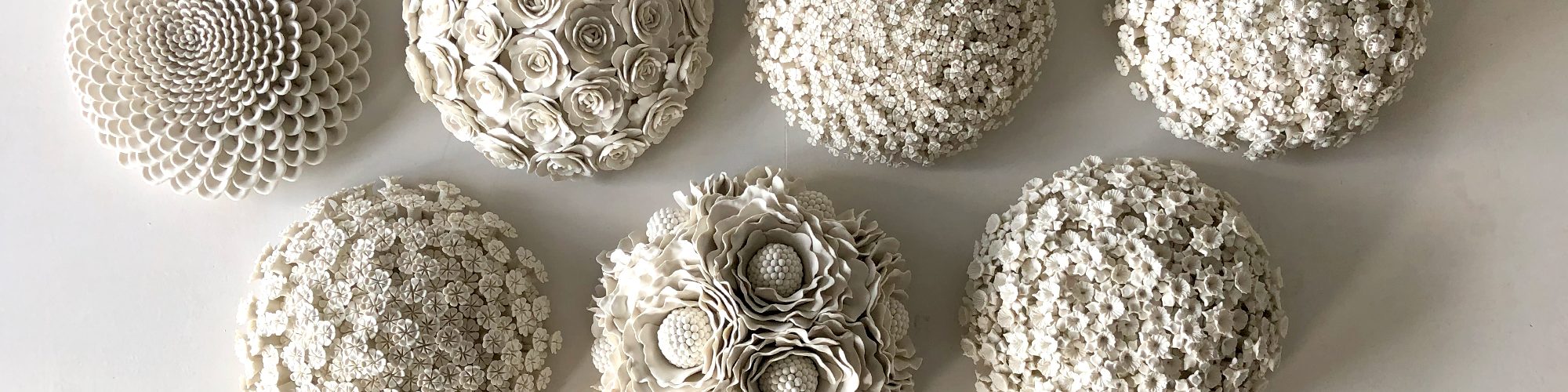
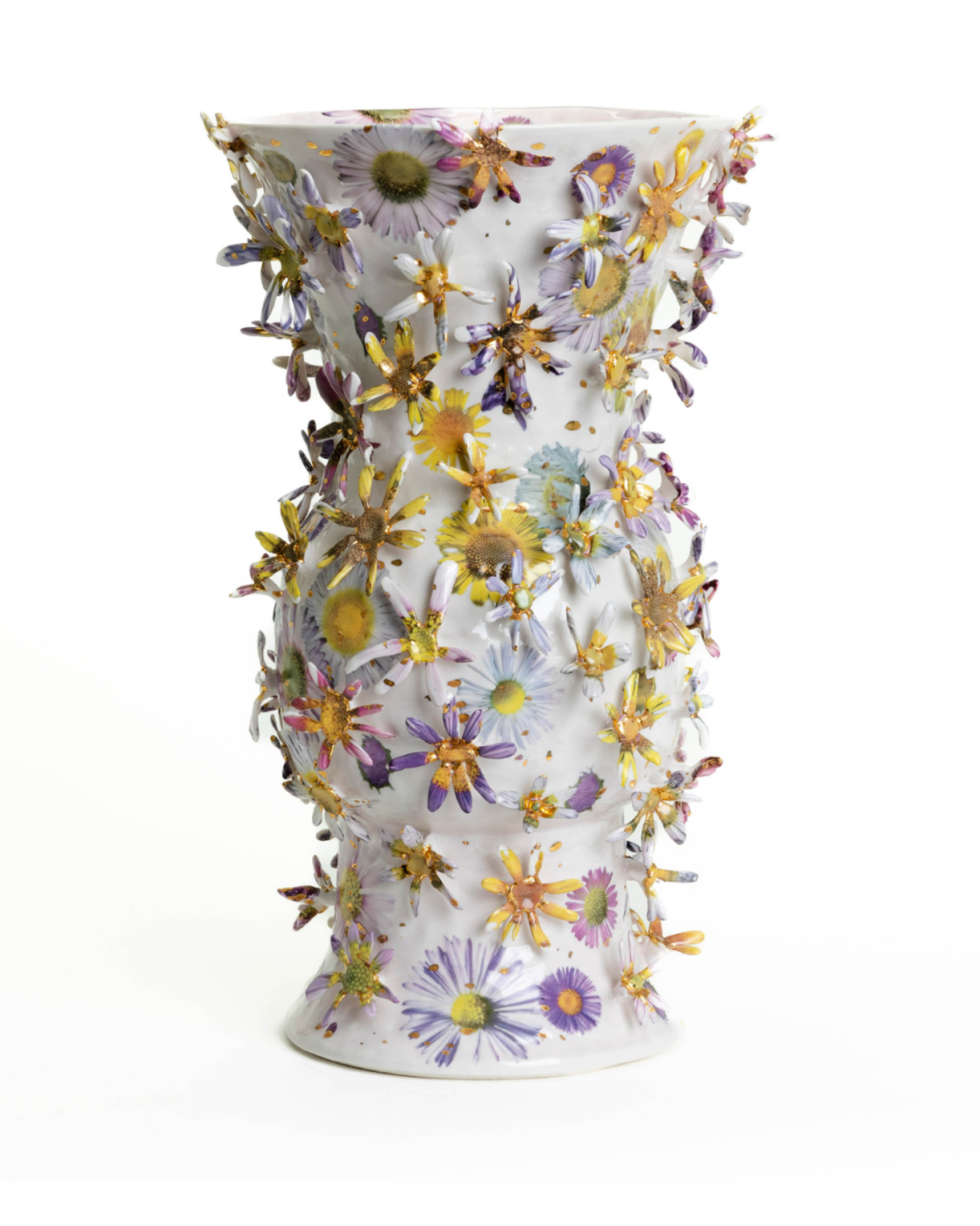
Vanessa Hogge creates porcelain sculptures adorned with intricate floral and botanical details. Annie Le Santo spoke to her to find out more about her creative process and journey
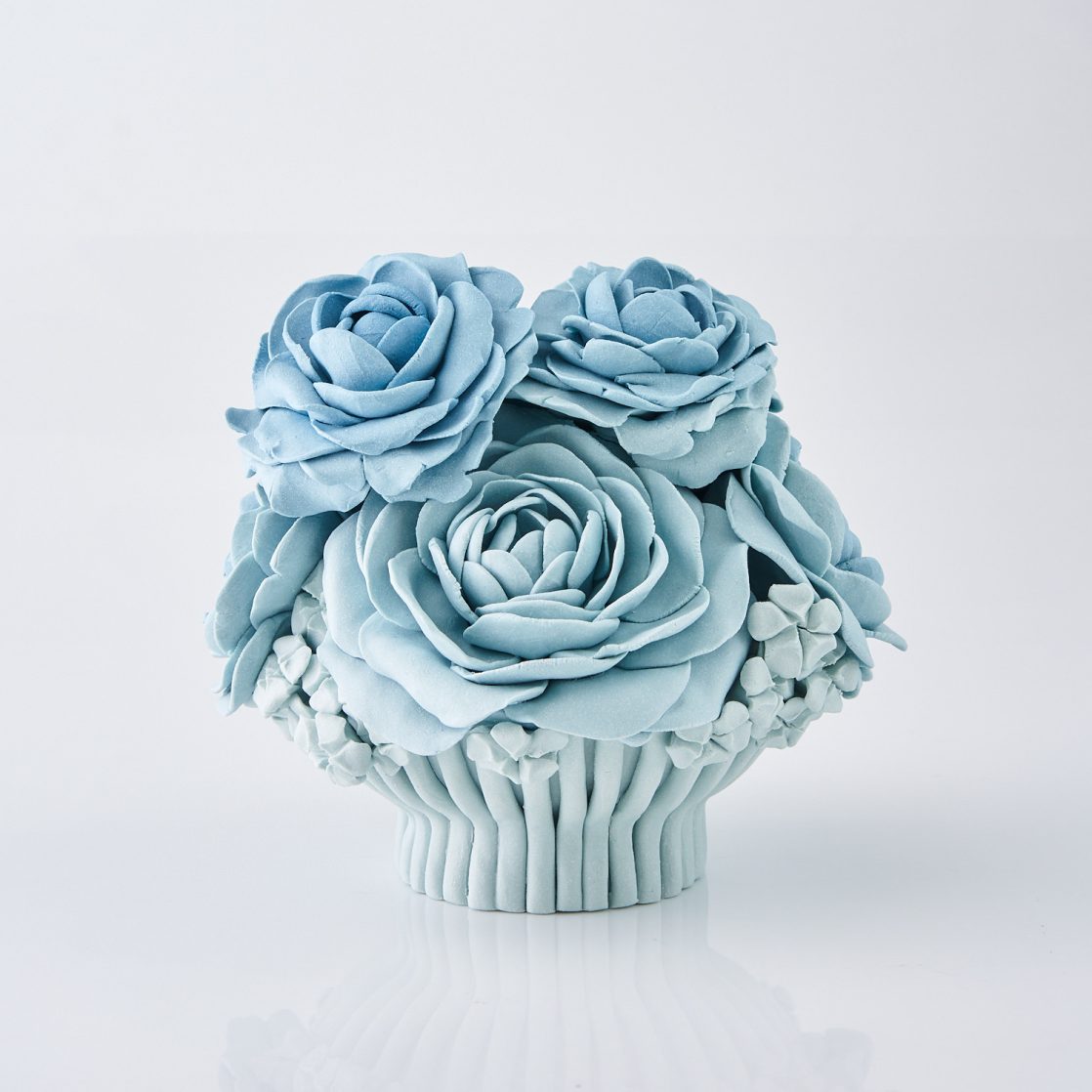
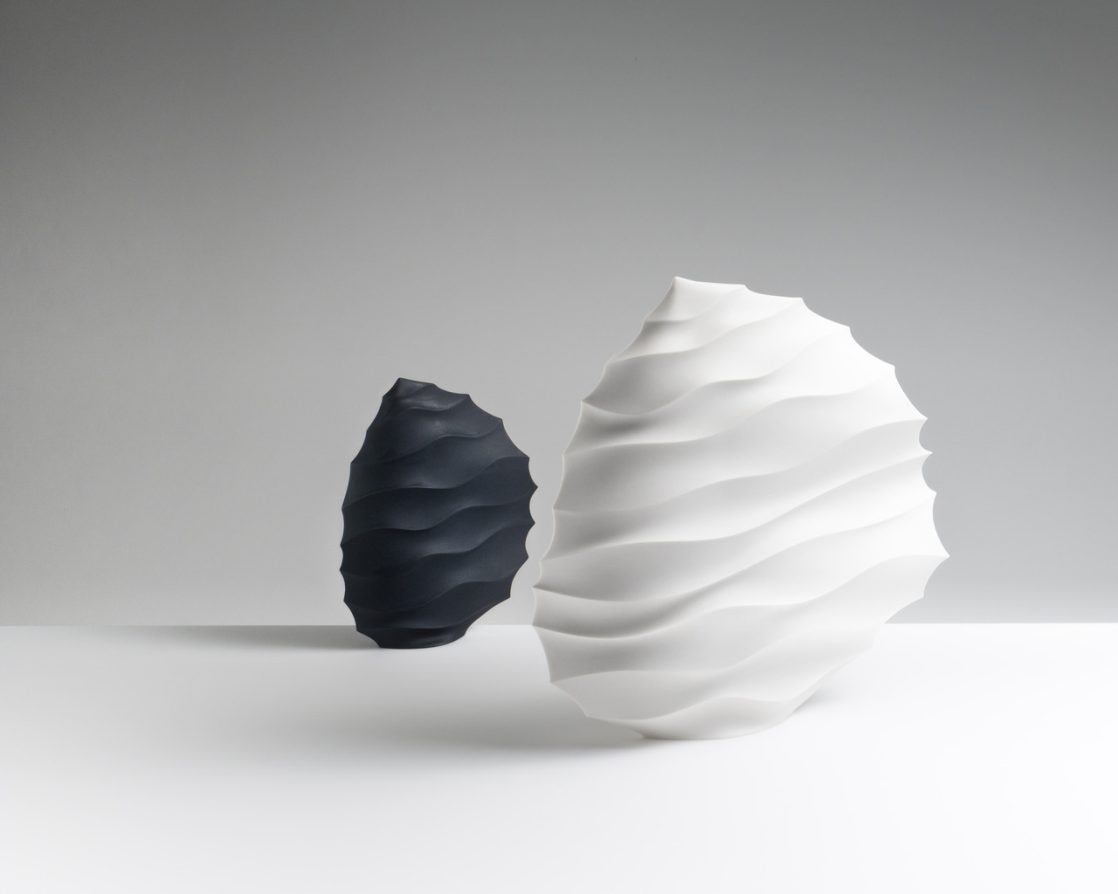
Vanessa Hogge’s wallflowers and sculptural vessels are a celebration of patience, craftsmanship and the timeless beauty of nature. No two pieces are the same as she takes an instinctive and visceral approach to each, painstakingly sculpting every petal and botanical detail by hand. With elaborate shapes and muted tones, they are quiet and loud simultaneously, appealing to both the minimalist and the maximalist alike. Hogge’s pieces reflect not just the hands of a skilled maker but also the contemplative essence of a deep thinker, capturing the experiences that shape her life and the therapeutic joy she finds in making them.
EARLY INFLUENCES
Born in Kenya and raised in South Africa before moving to the UK at 14, Hogge’s formative years were steeped in the vivid imagery of the natural world. One of her earliest memories of clay is from childhood road trips through the Eastern Cape, where her family would stop to buy painted clay horses made by local herdsmen. These small treasures sparked her fascination with ceramic objects. ‘They were so beautiful and so fragile,’ she recalls. ‘We treasured them but invariably a leg had snapped off by the time we had reached our destination.’
Also influential were the lush gardens of her mother (also an artist) and grandmother, which she now brings to life in her ceramics. ‘I look at my work as my version of the gardens of the women before me,’ she reveals. ‘Flowers have so much to offer, so many variations, so many different forms. As a means of decorating, they are perfectly suited to clay.’
Despite these vibrant inspirations around her as a child, Hogge began academic studies in the UK, reading History, English and French textbooks. She was set for a non-creative path. It was only after following a friend into the ceramics department one day that her trajectory changed its course. ‘I totally fell in love,’ she says. ‘It was the first time I touched malleable clay and made anything. I immediately dropped my academic subjects.’
From then on Hogge was dedicated to ceramics, going on to study an undergraduate degree in Ceramics at Bristol Polytechnic (now UWE), and later an MA Ceramics at the Royal College of Art (RCA). These early years were full of experimentation and her love for handbuilding began to take root. ‘It was the early 80s,’ she remembers. ‘It is funny to think back now, how, as ceramics students, we were all quite arrogant. We would say: “We are not learning to throw. We are the new breed of sculptural ceramicists”. But it is something I have regretted many years later, because I still can’t throw and would love to learn.’

TECHNICAL SKILLS
However, this hasn’t held her back; instead, her impressive technical skills have flourished in other areas. Rooted in her upbringing and a deep fascination with the natural world, she cultivated the intricate botanical style during her studies and it has become the signature of her work today.
Hogge’s passion for ceramics and creativity did not waver when her studies ended. However, the realities of sustaining a creative practice led her to step away from making. For two decades, she pursued other paths, including graphic design and interior styling. ‘At the end of it, I found myself burnt out after a negative experience with a graphic design job,’ she explains. ‘Then one day, I thought to myself, “I used to make ceramics”. With that thought, I grabbed a bag of clay and started making again, setting up on the kitchen table.’
Despite her 20-year hiatus, Hogge describes her return to ceramics in 2015 as though no time had passed at all. ‘It is strange how my work immediately resumed being floral,’ she reflects. ‘I never doubted for a moment that I would make flowers again.’
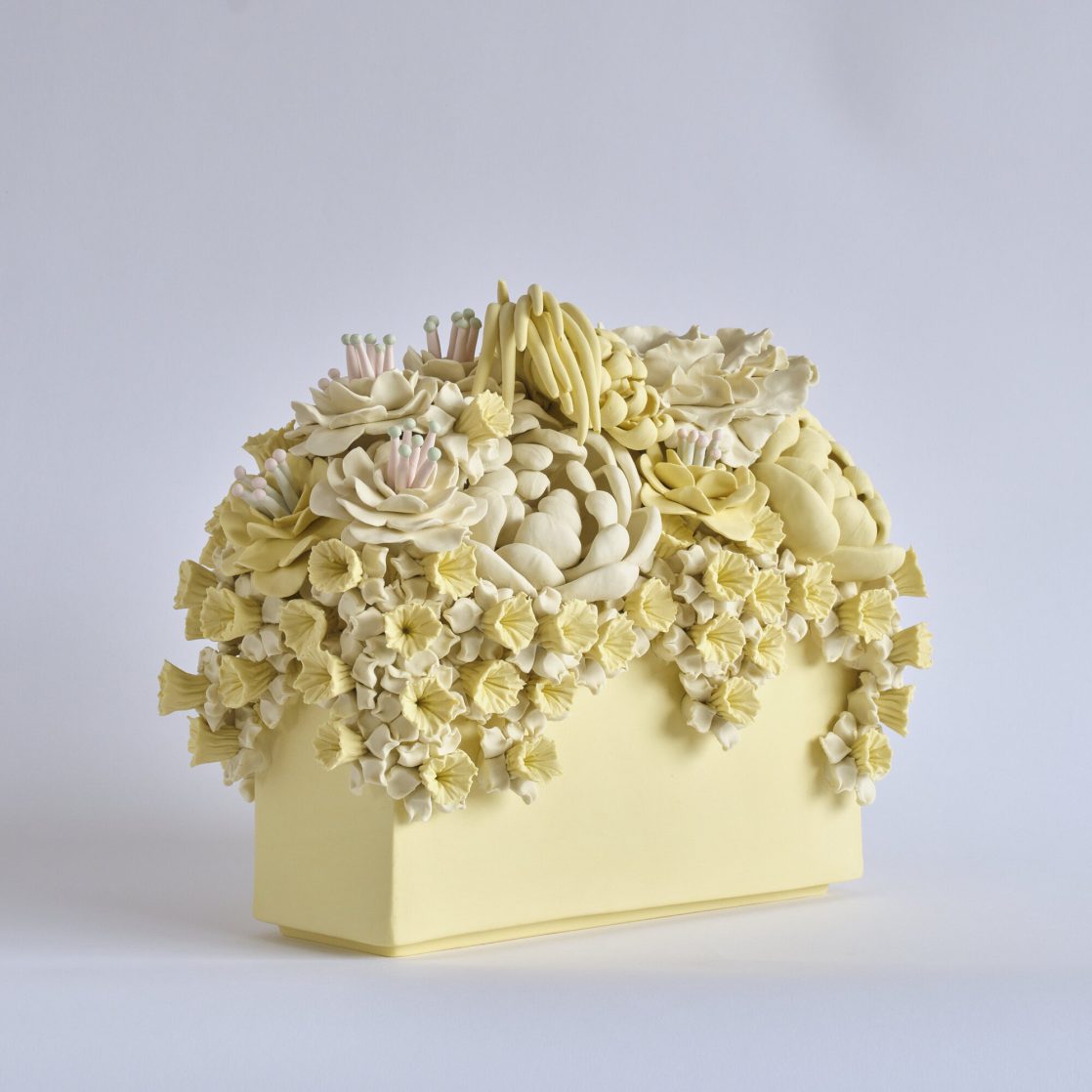
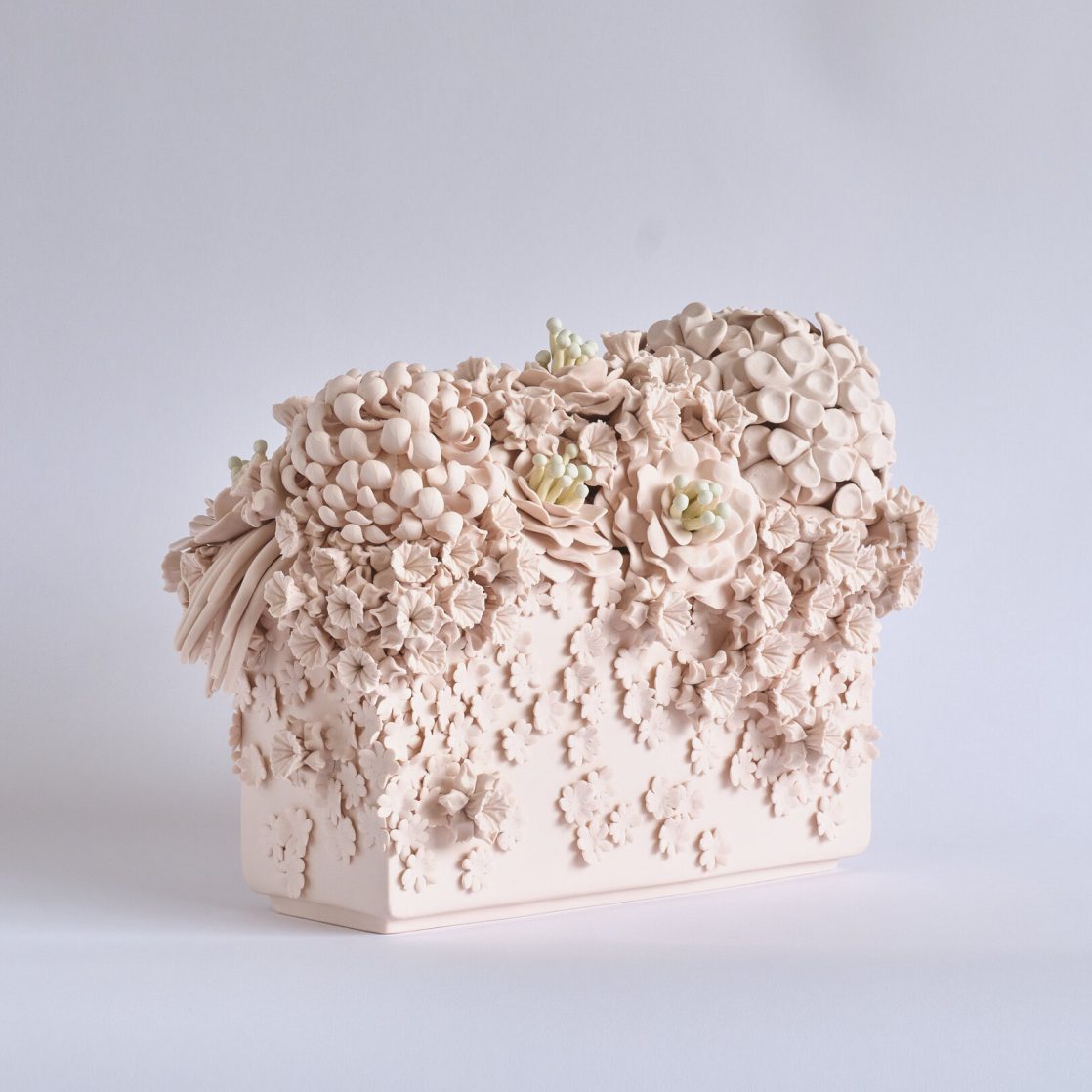
Using a small, second-hand kiln bought locally, she began creating decorative round tiles. She gravitated towards porcelain and has worked with it exclusively in the ten years since; either kept pure white, tinted with soft pastel stains or a striking black. ‘I love the way the colour runs through the clay and doesn’t just sit on the surface like a glaze. And, how my marks – palm and fingerprints – are not lost, I like to leave those as they add to the texture in a very subtle way,’ she says.
Looking back, Hogge acknowledges that her years working in other industries quietly equipped her with transferable skills she hadn’t initially recognised. Once she began marketing her botanical ceramic sculptures online, opportunities began to surface. She swiftly secured a studio space at Cockpit Studios in London, a move that was a milestone in establishing herself as the ceramicist she is today.
CRAFTING BEAUTY
For Hogge, returning to ceramics wasn’t simply a rekindling of a past passion; it was the beginning of a new chapter that allowed her to connect deeply with her own story. ‘People have said to me, “You can’t make flowers forever; eventually you will get sick of it”. But I don’t know if I ever will. Making flowers is what I do,’ she explains.
Her pieces embody patience and skill – they represent the value of effort, of doing things slowly and with intention. The intricate details of her work, from the hand-sculpted petals to the fingerprints left behind in the clay, are testaments to the human touch, a quality increasingly rare in a world of mass production and artificial intelligence.
Hogge herself contemplates the role of art in an ever-evolving world and is hopeful. ‘Our lives are likely to become increasingly dominated by AI,’ she thinks. ‘Human creativity could go one of two ways. It could be rendered obsolete by machines able to mimic ‘artistry’ rapidly, or it could take on an even greater significance, which is my hope.’
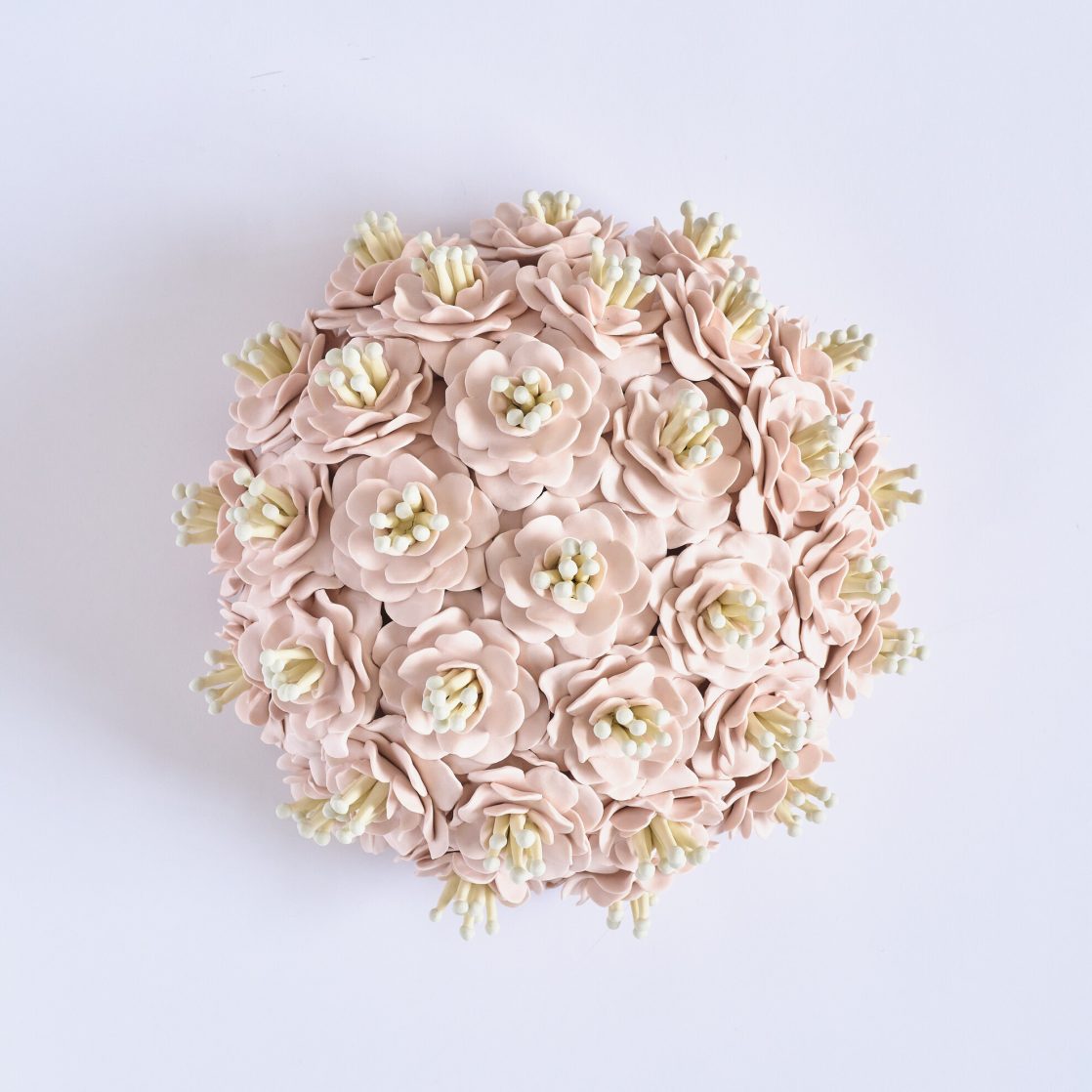
Drawing parallels to the utopian vision laid out by William Morris in News from Nowhere, Hogge dreams of a world where technology could pave the way for the creation of beauty. ‘If we are released from the necessity of mundane work, we can devote our time to creating beautiful things,’ she says. ‘The infinite patience I require of myself to craft my pieces is a means of self-expression and emotional processing, as well as I hope, a way to delight others.’
As she moves forward, Hogge remains driven by the same curiosity and determination that she experienced when she first stepped foot into her school ceramics department. While she has big ambitions for larger installations, collaborations and solo shows, her greatest aim is simple: to create work she loves. ‘I am never satisfied,’ she admits. ‘I always think I can achieve more. But that’s a good thing. It drives me to keep trying, to make the next piece better than the last.’
In her delicate florals and bold compositions, there is a sense of time captured – a quiet rumination on life’s cycles, of beginnings, pauses and returns. Through her art, Hogge reminds us that beauty lies in persistence and reinvention, and that it is never too late to begin again.
For more details visit vanessahogge.com; @vanessahogge
Ceramic Review is the international magazine for contemporary and historical ceramics, ceramic art and pottery.
As a subscriber to the print magazine, you also get FREE access online to the entire Ceramic Review archive – going all the way back to our first issue in 1970. Digital subscriptions are online only.