X
Welcome to Ceramic Review
Ceramic Review is the magazine for contemporary and historical ceramics, ceramic art and pottery.
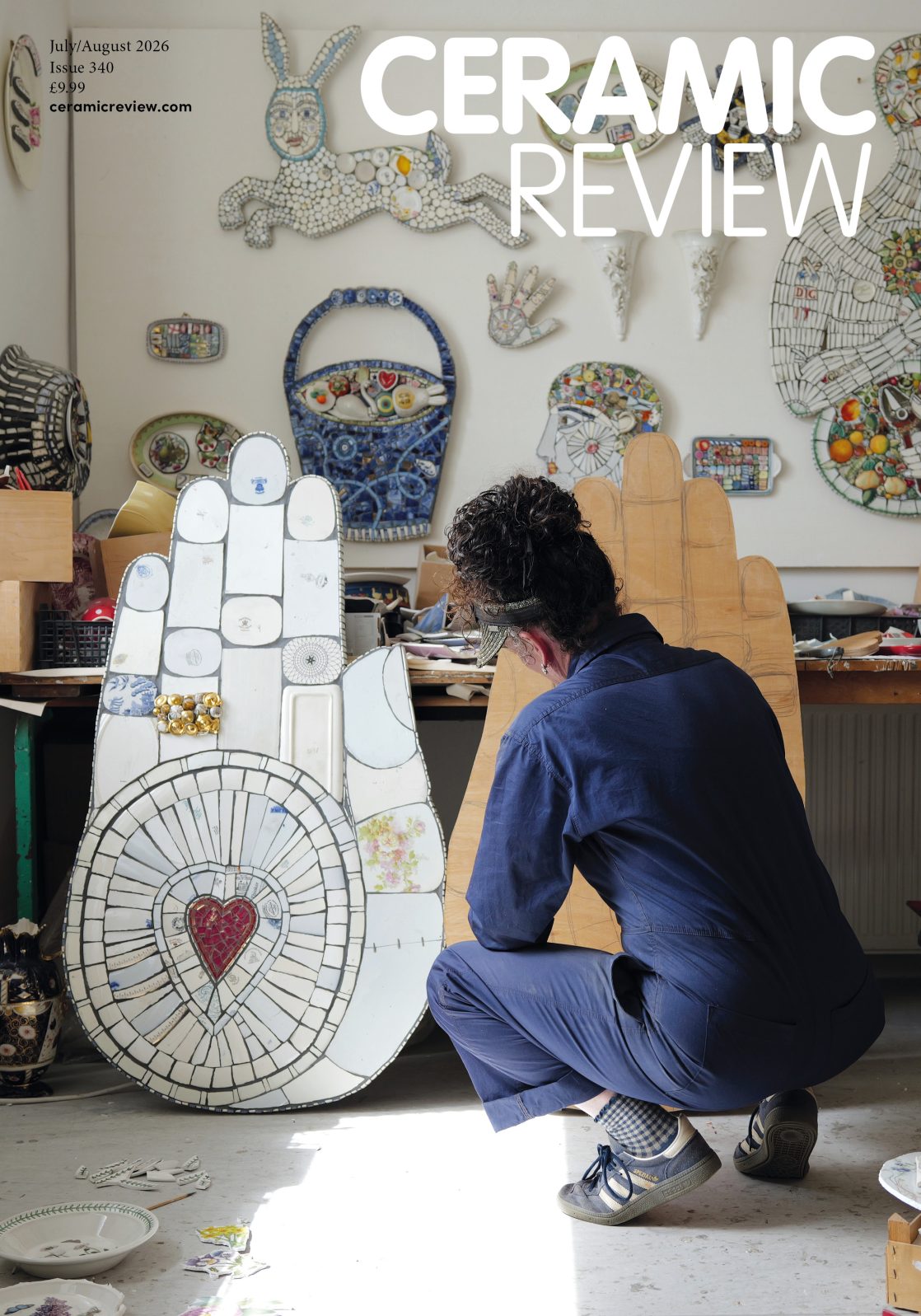
Ceramic Review Issue 340
July/August 2026
Ceramic Review is the magazine for contemporary and historical ceramics, ceramic art and pottery.
July/August 2026
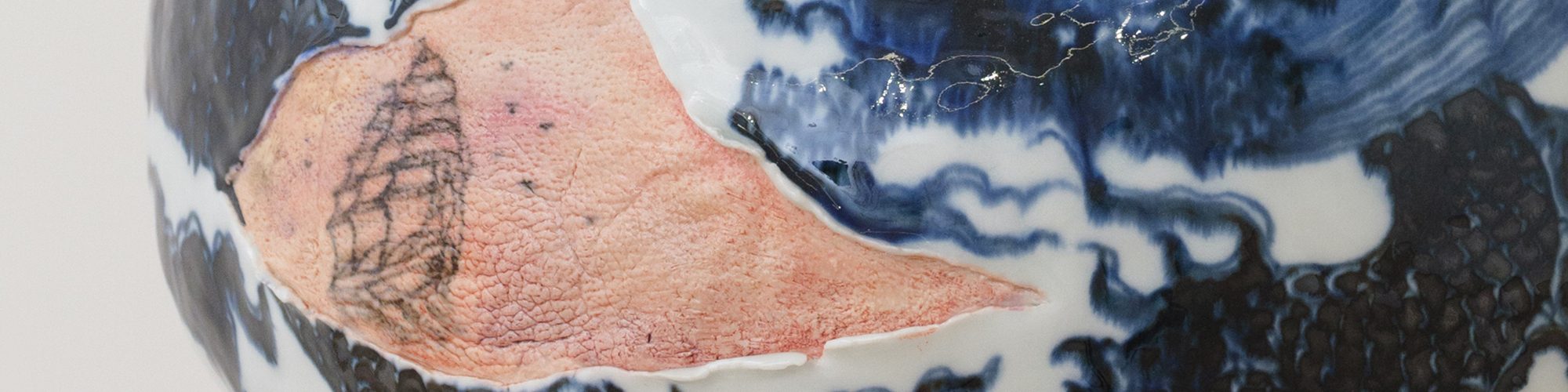
Annie Le Santo discusses the heritage of blue and white porcelain with Lin Wang and how she reflects this Eastern tradition with her contemporary Western aesthetic

From Lin Wang’s studio in Oslo, blue and white porcelain plates and sculptures are born. While some pieces echo traditional Chinese craftsmanship, a closer look reveals unexpected motifs drawn from both Eastern and Western corners of the world. For Wang, porcelain is not simply her chosen medium but a language, and one which she describes as her ‘mother tongue’.
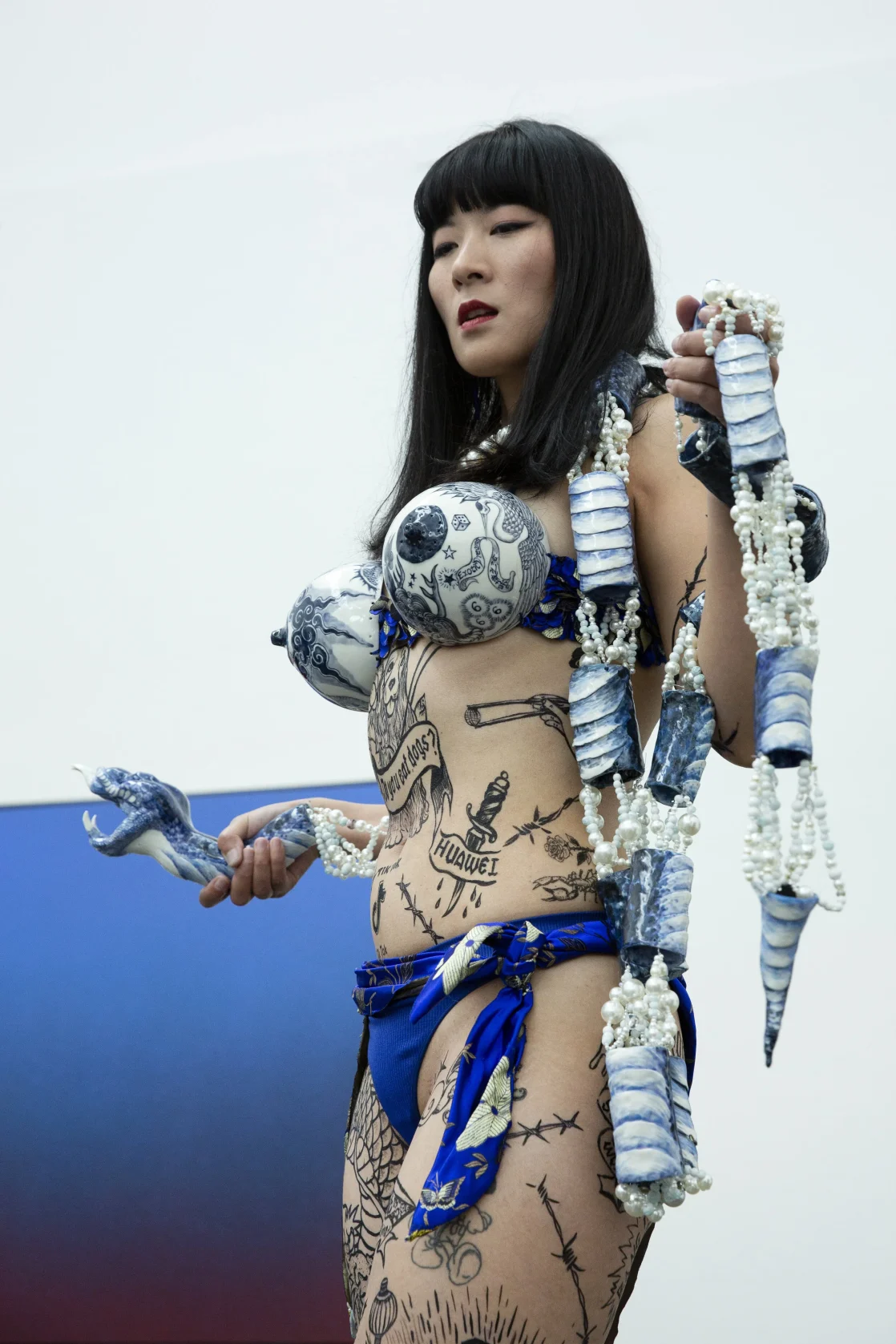
‘Porcelain is sensitive, just like me,’ she says, a statement that captures both the intimacy and the intensity of herself and her practice. Wang’s artistic journey has consistently been anchored by a sense of place and a yearning to belong. She juxtaposes Chinese blue and white export porcelain motifs alongside Western symbols, transforming objects into holders of memories and facilitators of cultural dialogue.
Through her work, Wang continuously returns to her own lived experiences, while also looking outwards at other people around her, demonstrating the enduring power of art to connect across continents.
RELATIONSHIP WITH ART
Born and raised in Zibo, a small industrial city in northern China, Wang’s relationship with making was shaped by both a tender and turbulent childhood. As a young child she lived with her grandparents, who were teachers of literature and art. ‘I read poetry and fairy tales with them,’ she says. ‘However, during my teens when living back with my parents, aside from being rebellious, the only thing I wanted to do was to leave my hometown.’ So as soon as she could, Wang left home and moved to Beijing.

This urge to move and remake herself elsewhere would later echo through her life and art. Driven and ambitious, she practised relentlessly, determined to secure a place at one of China’s leading art academies. At 18, she attended the China Academy of Art, where she chose to study sculpture, gaining a rigorous education in classical techniques. ‘Here, my tutor said to me, “You are naturally sensitive and sentimental; you should go to Jingdezhen and work with ceramics for your final work”. So I headed to the porcelain capital of the world.’
In Jingdezhen, Wang entered an environment completely immersed in porcelain. The Porcelain Sculpture Factory, a state-owned workshop on the brink of collapse, became both her classroom and gallery. However, Jingdezhen was not destined to be her final destination, just yet. ‘I see myself as someone who explores the world through art, and porcelain is my language to do so,’ she explains.
This aspect of Wang’s practice evolved further when she moved to Oslo, initially for a romantic relationship. The relationship ended shortly after her arrival and the transition to her new home proved difficult. ‘The Nordic environment hit me like a 360-degree shock: the endless winter darkness, an unfamiliar city and language barriers were all huge challenges.’
Despite this, Wang persevered. In the midst of her seasonal depression, she began creating porcelain lamps, a process where she describes herself as being ‘a lost sailor seeking a lighthouse’. Making became a form of healing.
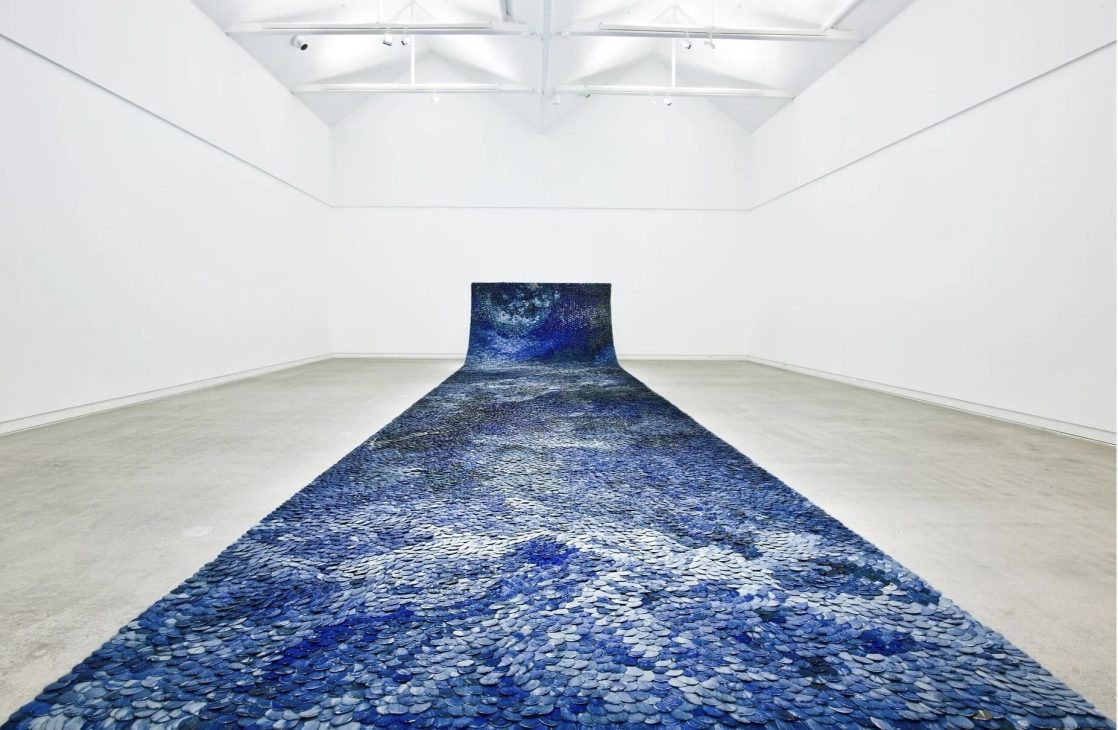
She placed the luminescent pieces in a small public glass gallery opposite Bergen train station, hoping they might bring warmth to passers-by navigating the same winter cold. Through this work, Wang realised that by channelling her daily dilemmas and feelings into art, she could begin to work through them. ‘After the winter passed, I finally had the energy and space to notice the world around me,’ she reveals.
PERFECT MEDIUM
‘East-West cultural differences, ideological shock, homesickness, food and more. As fellow humans, how can we sometimes be so different? I wanted to find answers through art,’ adds Wang.
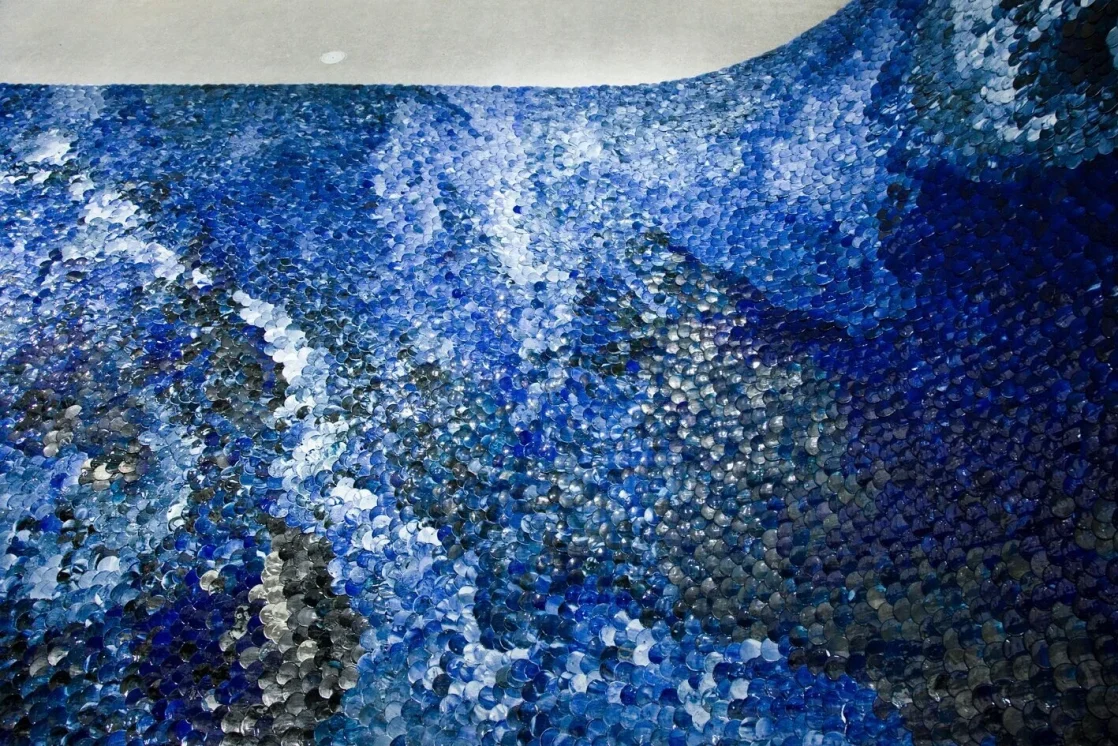
During her studies for her Master’s degree in Bergen, Wang discovered the perfect medium to answer her questions in Chinese export porcelain. Once highly coveted by Western merchants, nobles and churches, these objects were custom-made in China and shipped across oceans by sailors to many parts of Europe. The blue patterns on the porcelain acted as invitations, encouraging viewers across the sea to imagine a ‘mysterious East’. In this way, export porcelain became a vessel for a shared imagination between East and West, and Wang’s overarching project, Exotic Dreams and Poetic Misunderstandings, came to be.
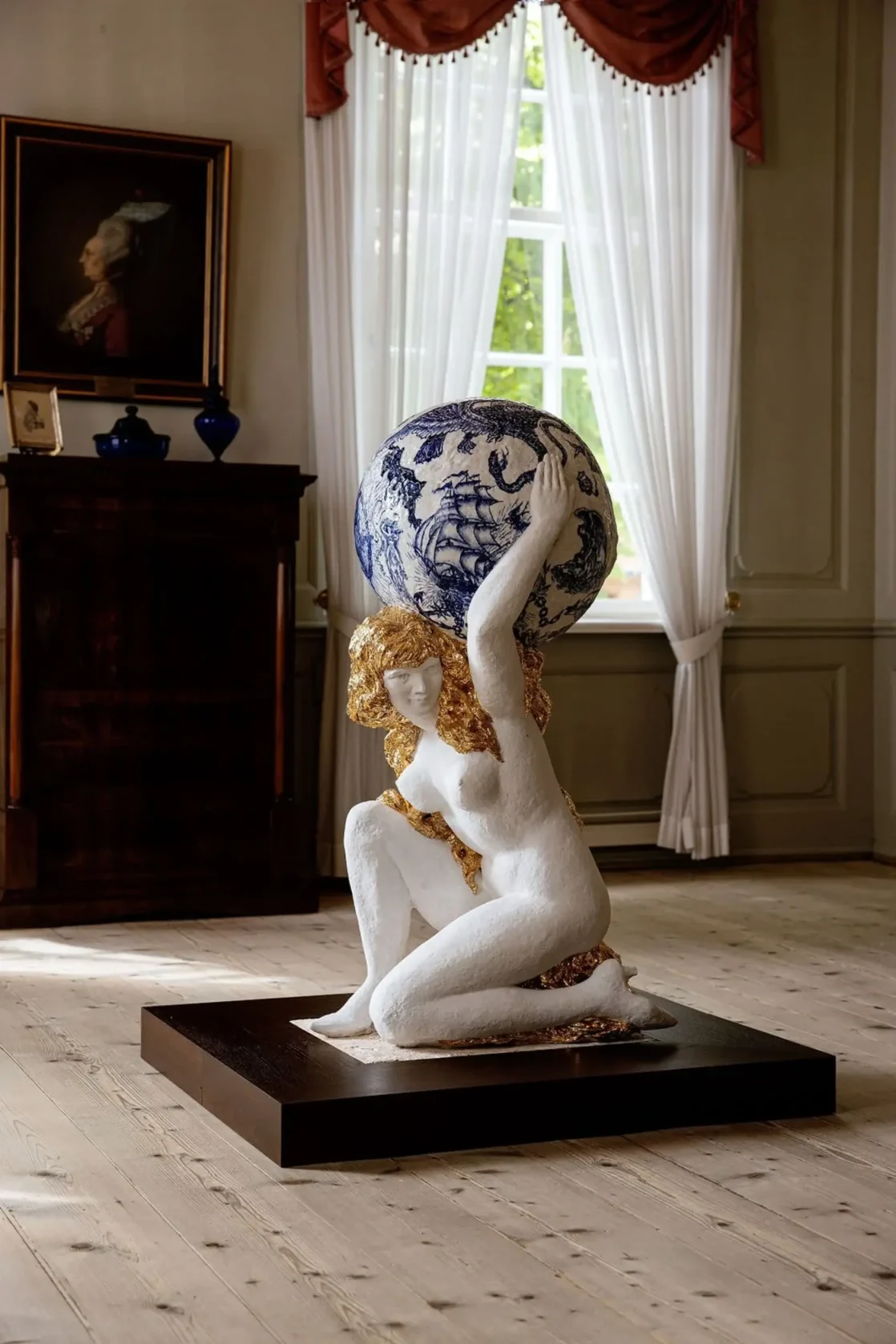
She collaborated with local Jingdezhen artisans to create a series of large plates. Using a tattoo gun, she ‘tattooed’ the skin of the unfired porcelain with traditional sailor motifs. ‘Blue symbolises the ocean,’ she says. ‘Most of the depictions of larger boats were tattooed on the chests or backs of the sailors who made these journeys. The boats sailing towards the window illustrate a journey towards the unknown.’
Whilst making her plates, Wang found herself searching for ways to connect with her fellow students. She turned to food as a social and cultural bridge, and began hosting dumpling-making workshops. At these sessions, strangers became friends through the shared act of cooking.
These informal gatherings laid the groundwork for Performance Dinner Vol. 1, staged at the KODE 4 Museum in Bergen. The project unfolded as a large-scale, interactive solo exhibition where visitors were invited to eat from Wang’s oversized porcelain plates while performers navigated the space around them. Retired sailors were invited to participate, singing sea shanties, and guests ate with both knives and forks, and chopsticks. What unfolded was neither exhibition nor dinner alone, but a temporary community formed through art, participation and shared experience.
Ten years later, with her community and place firmly established, Wang is still based in Oslo. Her relentless devotion to her work has resulted in an abundance of high-profile and ambitious sculptural projects exhibited around the world. Her practice remains rooted in porcelain, yet increasingly extends beyond object-making into performance. Her work consistently returns to the same goal: using porcelain as a means of communication when language falls short.
PORCELAIN DIALOGUES
Whether addressing loneliness, cultural questions, or the complexities of identity, Wang approaches each project as both a therapeutic personal interrogation and an open invitation to others. ‘All of my projects are about solving my everyday dilemmas,’ she explains. ‘Moving beyond the object allows me to involve other people too, to make them part of the work. Performance is a way to make the intangible tangible.’
As a deeply contemplative and emotive artist, Wang craves both belonging and adventure. Now, as she is reflecting on her decade in Norway, she envisions a future of a more nomadic way of living and working. She speaks of a desire to spend time in different places through residencies, perhaps with a base in both Norway and China, allowing new contexts and communities to shape future projects.
Moving, for Wang, is not just a change of place: it is the fuel for creation, a source of inspiration that keeps her work alive. Wherever she is, it is clear that porcelain remains central as a living, responsive material. To Wang, her devotion to her material, and the act of creating with it, serve both as an anchor and a vessel: keeping her grounded and moving her forwards. All whilst carrying stories across borders and offering, for Wang, a fragile yet resilient way of experiencing the world.
For more details visit linwangart.com; @linwang66
Ceramic Review is the international magazine for contemporary and historical ceramics, ceramic art and pottery.
As a subscriber to the print magazine, you also get FREE access online to the entire Ceramic Review archive – going all the way back to our first issue in 1970. Digital subscriptions are online only.