X
Welcome to Ceramic Review
Ceramic Review is the magazine for contemporary and historical ceramics, ceramic art and pottery.
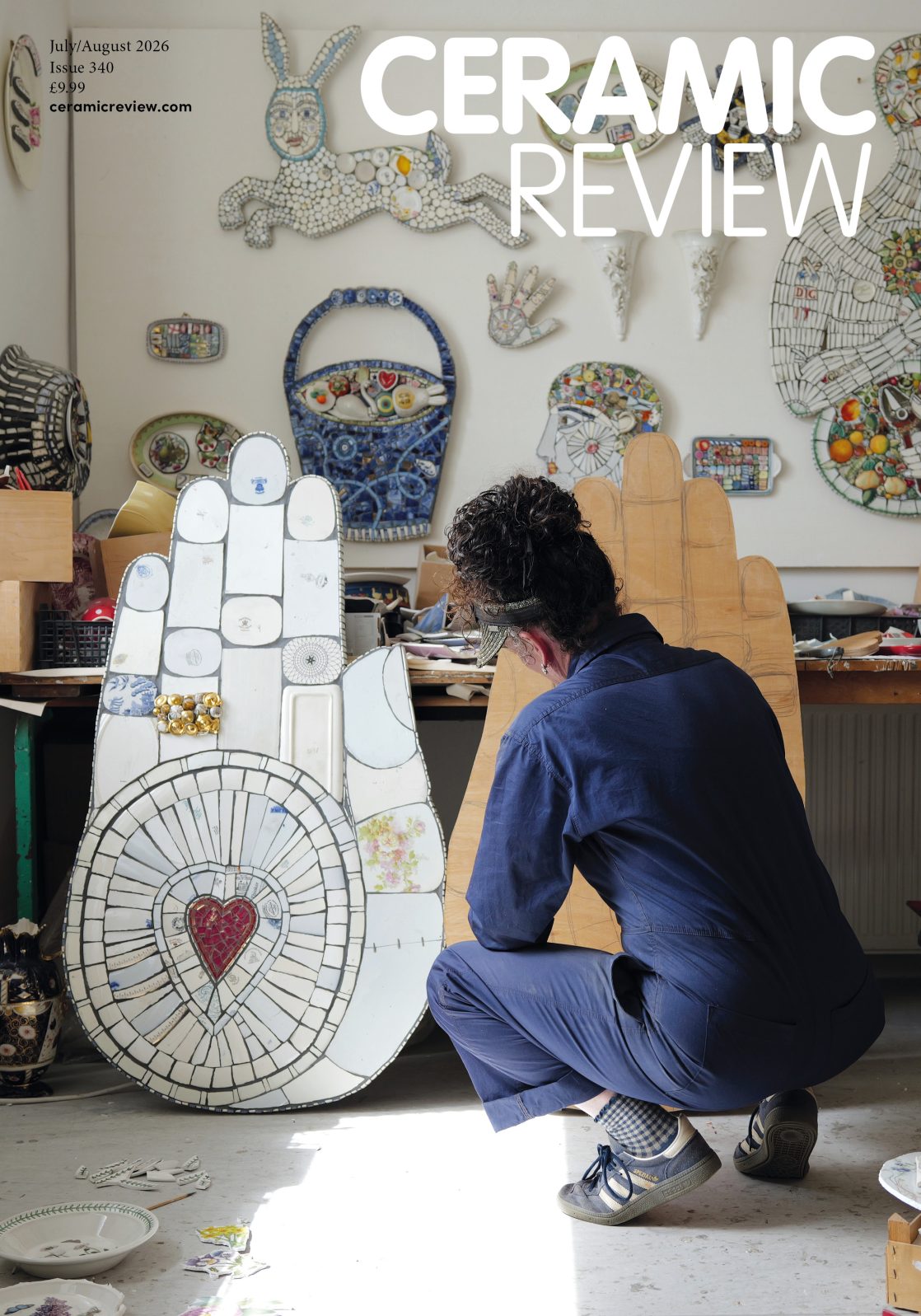
Ceramic Review Issue 340
July/August 2026
Ceramic Review is the magazine for contemporary and historical ceramics, ceramic art and pottery.
July/August 2026
The act of making is crucial to Alicja Patanowska, alongside a need to raise awareness of global challenges, reveals Corinne Julius
Alicja Patanowska is an artist with a mission. She investigates problems, especially ecological challenges through the medium of clay. Activism is an important part of her practice, but she is not a finger wagger. ‘I don’t want to lecture anyone,’ she explains. ‘I want them to be intrigued by beauty and then hopefully they will be interested enough to ask questions.’
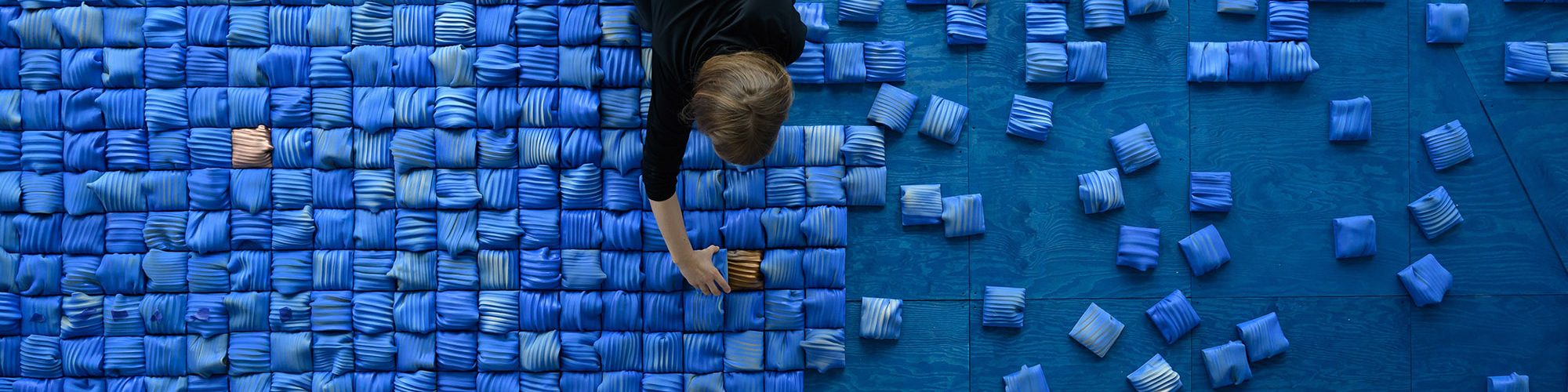
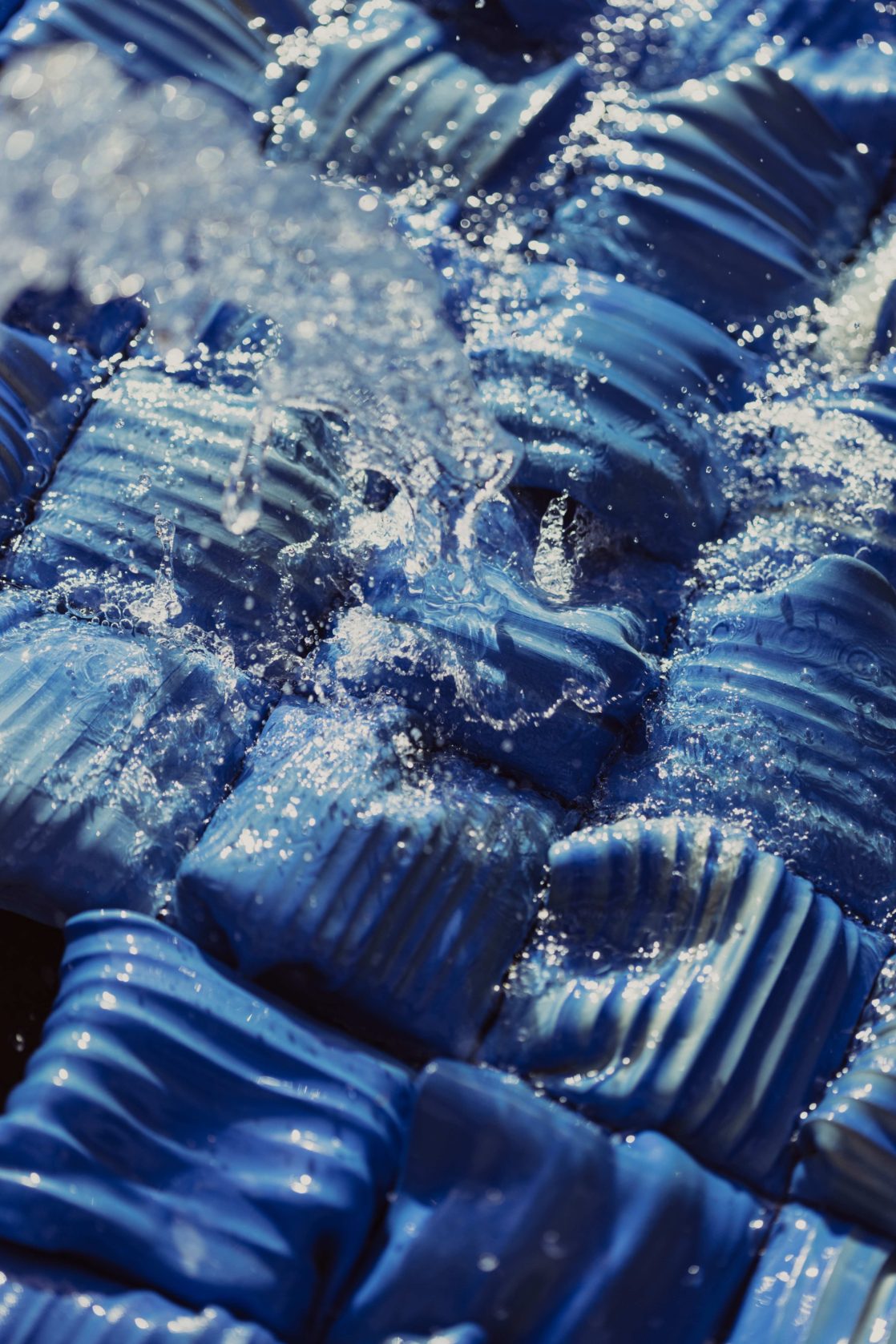
Her recent project at the V&A, The Ripple Effect, was a case in point. The installation consisted of a seating area bordering a fountain, surrounded by 2,000 handmade, indigo-blue rippling tiles, of which just eight were coated in copper lustre, fired at 800˚C. It was partly constructed from material from Żelazny Most Reservoir, Europe’s largest reservoir for mining waste based in the southwest of Patanowska’s native Poland.
Rather than being hectored, visitors were invited to reflect in a poetic way on the contested relationship with natural resources in which so much material is extracted to produce so little. This was emphasised using square tiles that were similar to pixels, making a graph. ‘It is a ratio of how much earth you have to mine for the copper and how little copper you can get from it. From one tonne of mined material, you get only four kilos of copper. Two tonnes, 2,000 tiles, eight kilos, eight copper tiles,’ explains Patanowska.
POTTERY INTUITION
Her path to ceramics was not a given, but rather sparked when she was 13 by a serendipitous school visit to a potter’s workshop in Kashubia near her birthplace. ‘I was born into a family that was not artistic,’ she reveals. ‘It was the first time I ever saw a potter; in life, in a book or a film. I didn’t know that such a thing existed. When I saw this old man sitting, creating, it was the strongest intuition I have ever had in my life. I didn’t notice when everyone from my class, plus a teacher, left. I decided then that I would be a potter. I just said to myself, I have no idea what he is doing, but I will do the same thing in my life.’ And she did, despite the opposition of her parents, who refused to allow her to go to art high school.
Subsequently, she studied in Wrocław, Poland’s only ceramic school, where she spent every moment of her five years learning and befriending her teachers, one, Leri Papidze, now assists her in producing large-scale installations. The course was split between industrial design and art-based work. Studio pottery, deemed unacceptable under the former communist regime, was not included.
Her graduation show consisted of 1,000 thrown vases that she gave away to encourage people to take art home, not just experience it in a white cube. For Patanowska, it is the process of making that is most important. As a student she had created a number of large objects. Undecided on their future, she smashed them. ‘It was the most beautiful moment ever, because I honestly started to feel that the process of making is the most important part of my practice, not the results.’
Patanowska worked briefly as a studio assistant for Monika Patuszyńska, who gave her the opportunity to work with porcelain and meet members of the international community.
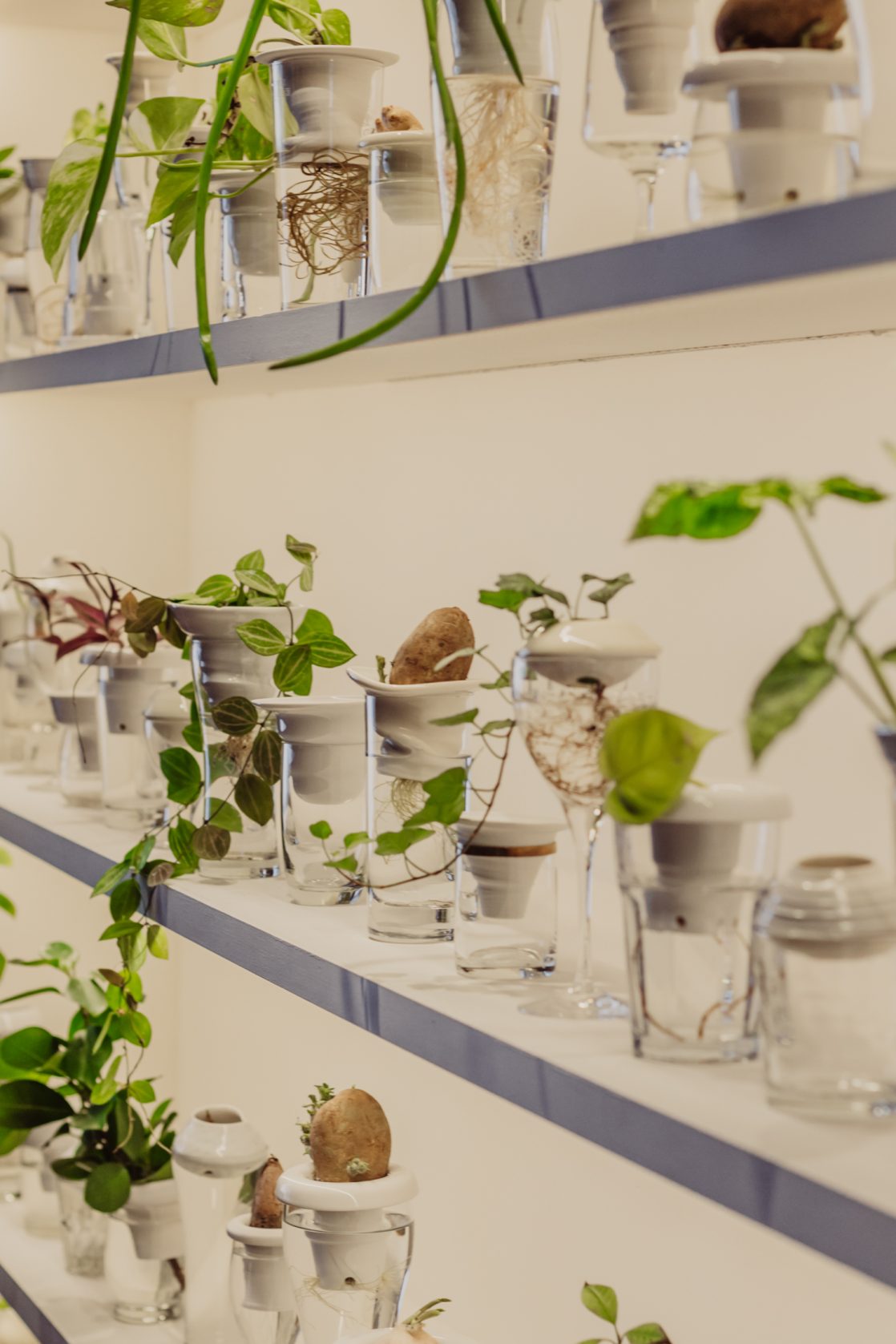
She subsequently won the Sarah Griffin Scholarship to the Royal College of Art (RCA) in London, where in her first year, she experimented with everything. She collected random glasses around London. ‘I made photos of the places where I found the glasses and then I designed porcelain components, which you put on the top of the glass as a hydroponic system, which allows you to see roots as well as the green parts of the plant. For me, it was an art installation. My aesthetic is about a lot of small objects together – I love it.’ This work Plantation, is now a staple.
‘I need a story. I need research, I need something behind it. I always had a feeling that there is amazing potential in craft. I knew, but I couldn’t express it. Then I joined craft with research on the problem of waste, upcycling and plants. Nature is super important to me as I grew up in a rural village.’
PORCELAIN PERSPECTIVES
For her graduation show at the RCA, Patanowska presented both Plantation and Stratum Collection, which was based on Plantation. It was a sell-out and gained her commissions, including for the Shanghai Museum of Glass. She returned to Poland and had Plantation made commercially, selling at the Tate, MoMA, the Barbican, as well as in France, Denmark, Germany, Switzerland, Sweden, Ireland, Japan and Dubai.
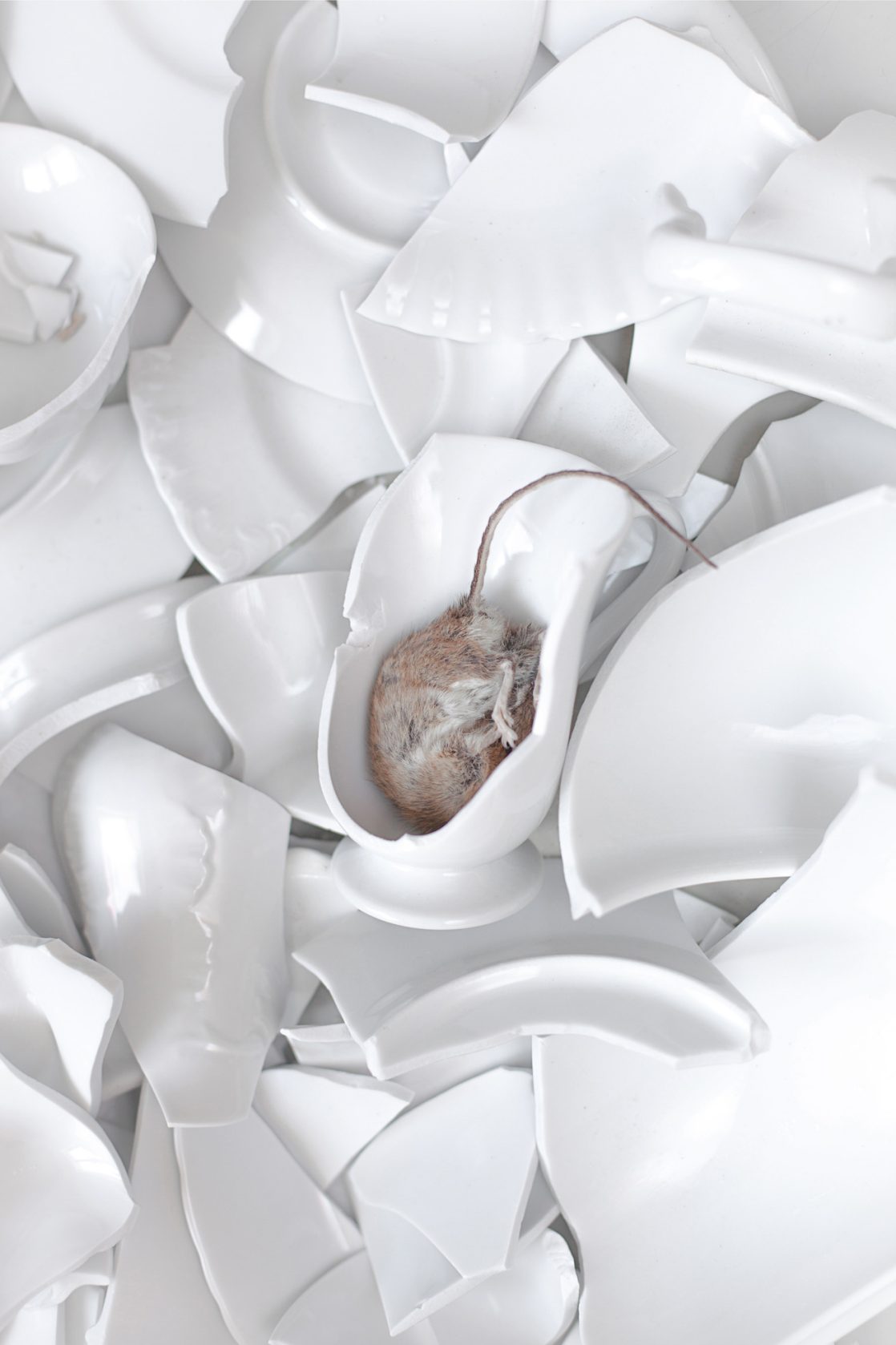
In 2017, she had a major solo exhibition Of Mice and Men in Wrocław. Collaborating with a taxidermist, she placed stuffed birds and small mammals in hills made of three tonnes of porcelain shards. ‘I wanted to do an exhibition from a non-anthropocentric perspective, looking at how we treat animals the wrong way.’ Then came Zoepolis, a collaborative research project also exploring the non-human perspective.
Up until then Patanowska had worked only in shades of white. ‘I was convinced everything should be white,’ she reveals. But during a residency in Jingdezhen, she began to experiment with colour, using spray technology. ‘I was like, let’s see what they have. Can I use this tool? My hands were more involved than my head. I did hundreds of samples, spraying with pigments with a clay body and Parian porcelain.’
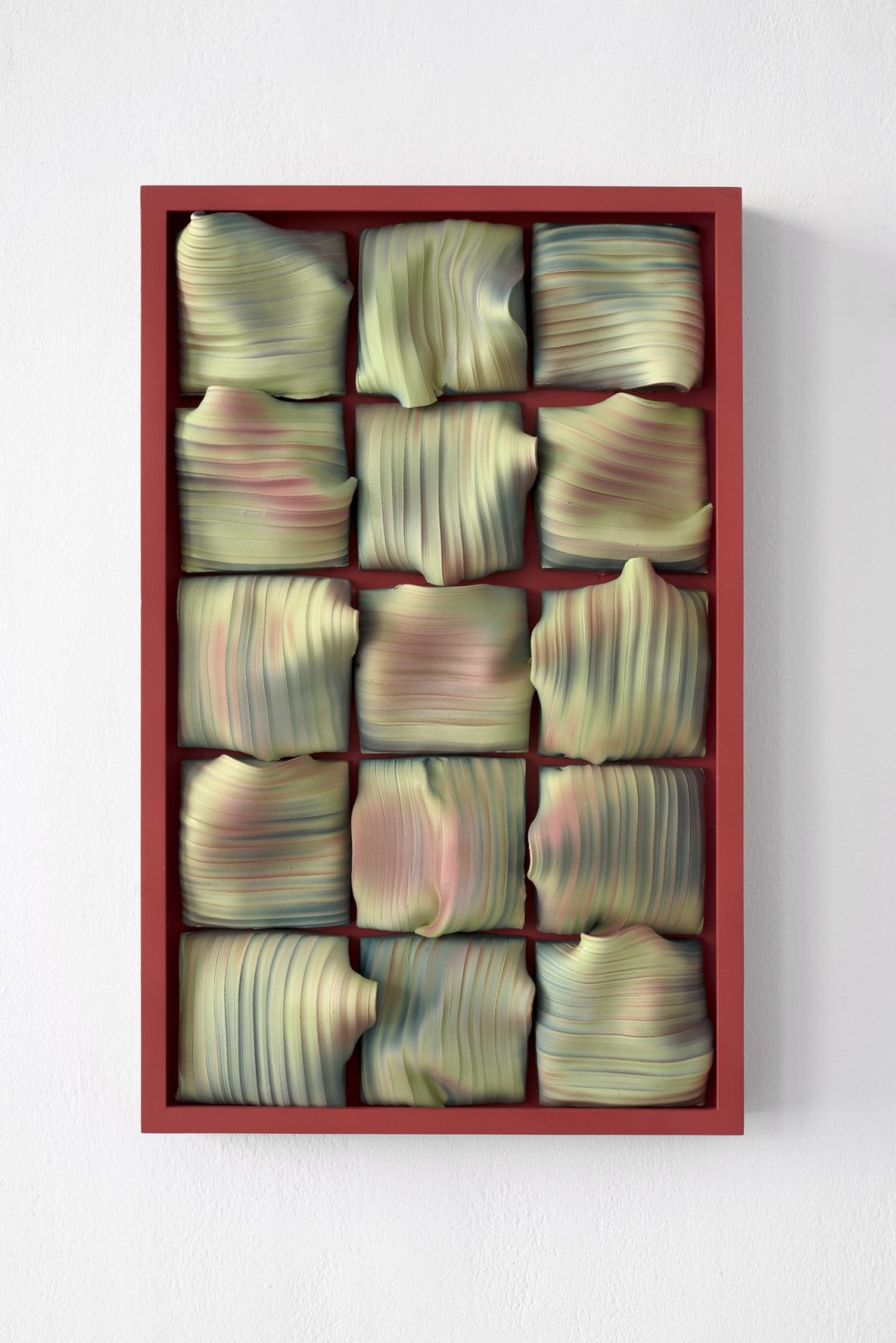
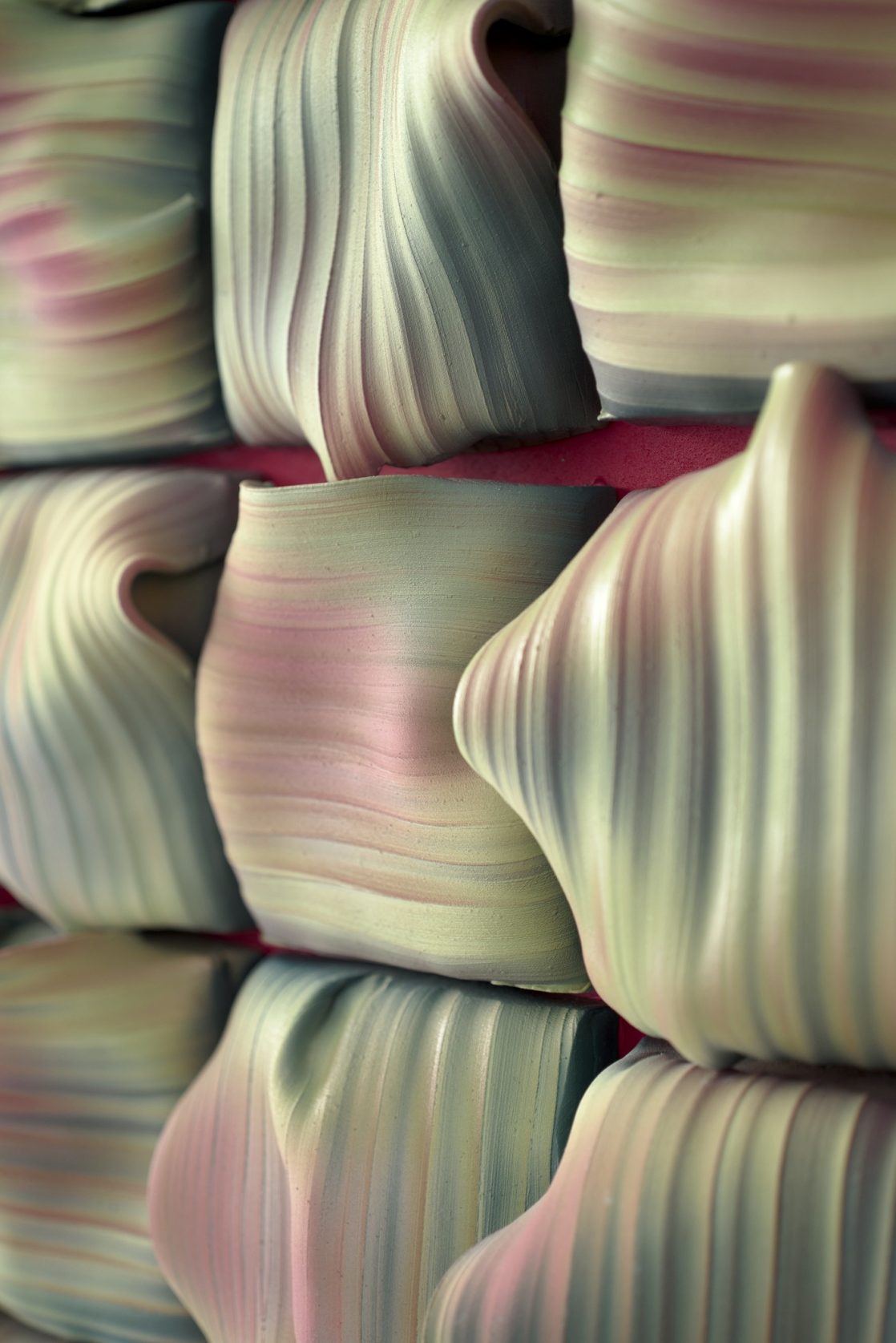
She also began to work with tiles, referencing the traditional bowl-like three-dimensional tiles she had seen in Poland as a child. She threw vessels on the wheel, pulling up on the inside with her left index finger to create a ripple effect and then cut them down to become tiles. ‘This is actually my super private mark. You must be focused, like walking on a slack line. Your body needs to be in the moment.’
The 3D dimensionality has a textile-like quality and an op art aesthetic, like mini Yaacov Agam sculptures. ‘You spray from the left-hand side, so you have, for example, pink only on the left side. Then you turn the tile and spray yellow from the right. I was so happy to see this result, it improved my pottery, giving it another layer. It was a relief for me to play with colours and to show my state of mind, state of soul.’
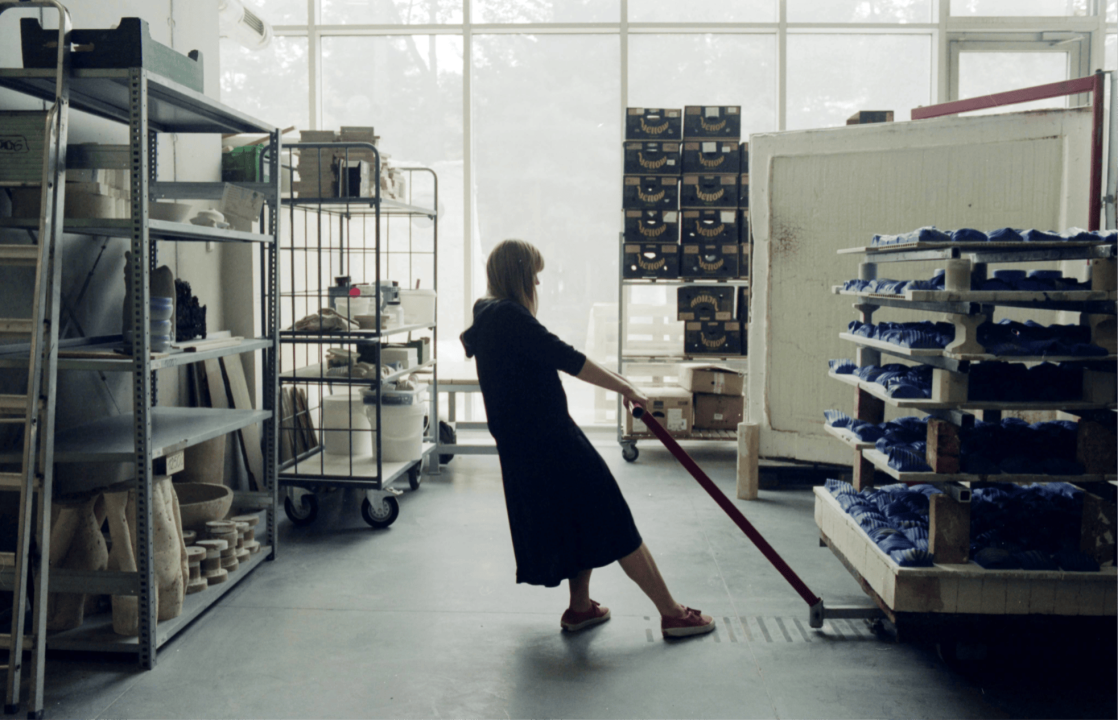
From 2019-2022, Patanowska undertook a PhD focussed on the concept of ‘embodied knowledge,’ a type of knowledge that is acquired and held through the body, based on sensory experience and physical action, rather than abstract thought alone. She investigated how touch, repetition and muscle memory shape both the object and the maker. ‘The most important aspect of my PhD thesis is that embodied knowledge, tacit knowledge, which we have through physical movement has as much importance as knowledge that we gain from outside, from books. We learn through the body.’
The name of her final exhibition, which included a reconstruction of her studio, was My Body Leads Me Down a Winding Path. ‘The process of making is the most beautiful thing, not just the finished object, although often the viewer can’t see that.’
GLOBAL COLLABORATION
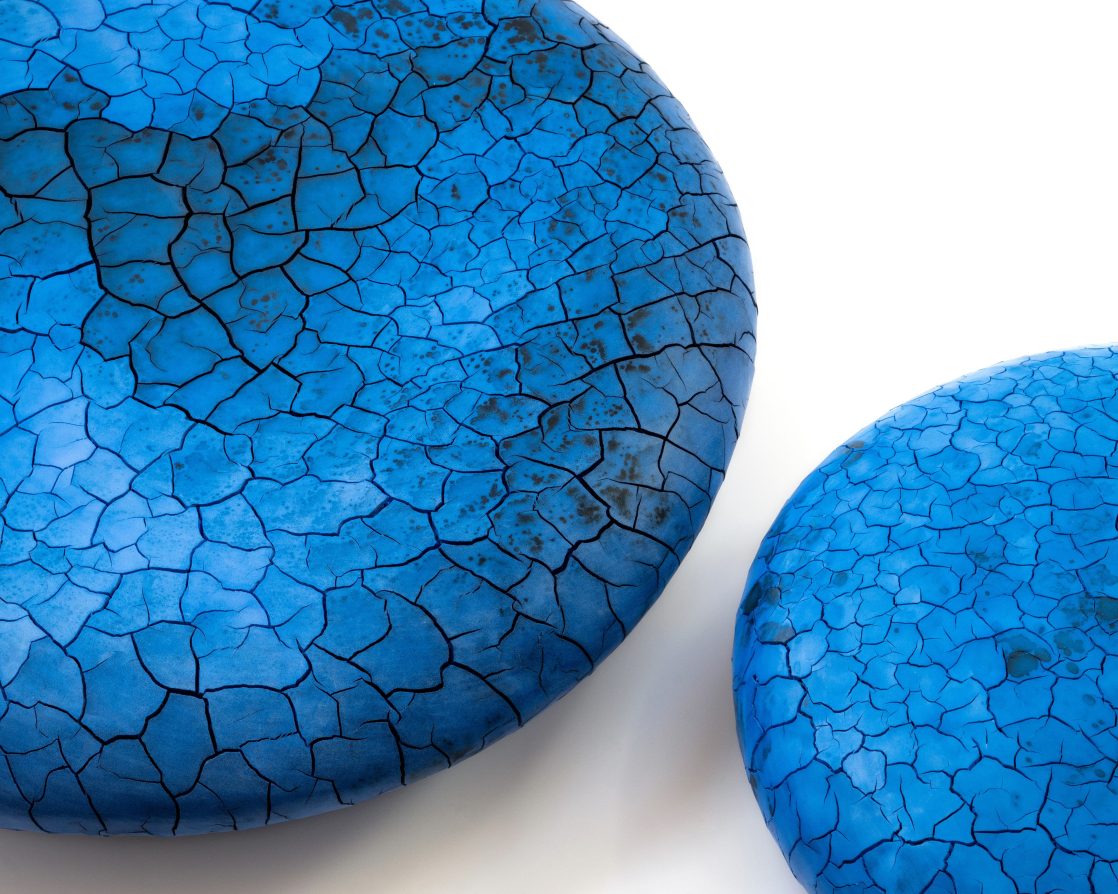
In 2024, she was invited by the Adam Mickiewicz Institute to make an installation in Brussels for the commencement of the Polish Presidency of the Council of the European Union 2025. She created We are the Weather, a dramatic interpretation of the need for collaboration and solidarity in the face of global challenges, particularly climate change, using three fountains, tiles and 16 large cobalt blue vessels. Each contained a speaker intended to play an SOS signal, reminding visitors of the need to care and collectively protect a precious resource.
The fountains told the story from the perspective of water and the tiles illustrated the story of water’s limited availability. Water was used both as a symbol of life and a metaphor for interspecies interdependence. It was a silent protest and because it was contentious it helped raise awareness in the European Parliament. Seven of the vessels were recently shown at the Cheongju Craft Biennale in Korea and one has been acquired for its collection, others will be used as part of the Fleet Street Quarter Festival of Words in London in spring 2026.
‘Next,’ she says, ‘I would love to do research and continue working with clay on the subject of rivers that don’t exist any more. Making is completely crucial to me and an essential part of my practice is activism.’
Patanowska wants to win over minds with the power of craft. ‘The trick of beauty is that you want to touch, or you want to look closer and then you want to know more,’ she explains. ‘I don’t want to convince people by frightening them, I don’t want to tell them what they should think or what they should do. I want to show them that there are different perspectives.’
For more details visit patanowska.com; @alicjapatanowska
Ceramic Review is the international magazine for contemporary and historical ceramics, ceramic art and pottery.
As a subscriber to the print magazine, you also get FREE access online to the entire Ceramic Review archive – going all the way back to our first issue in 1970. Digital subscriptions are online only.